

01
2 hours
Gyeongbokgung Palace
경복궁
Gyeongbokgung was the first royal palace of the Joseon dynasty, established in 1395 a year after Hanyang, now Seoul, was chosen as the capital.
- Must see
- Historic monument
City guide · South Korea
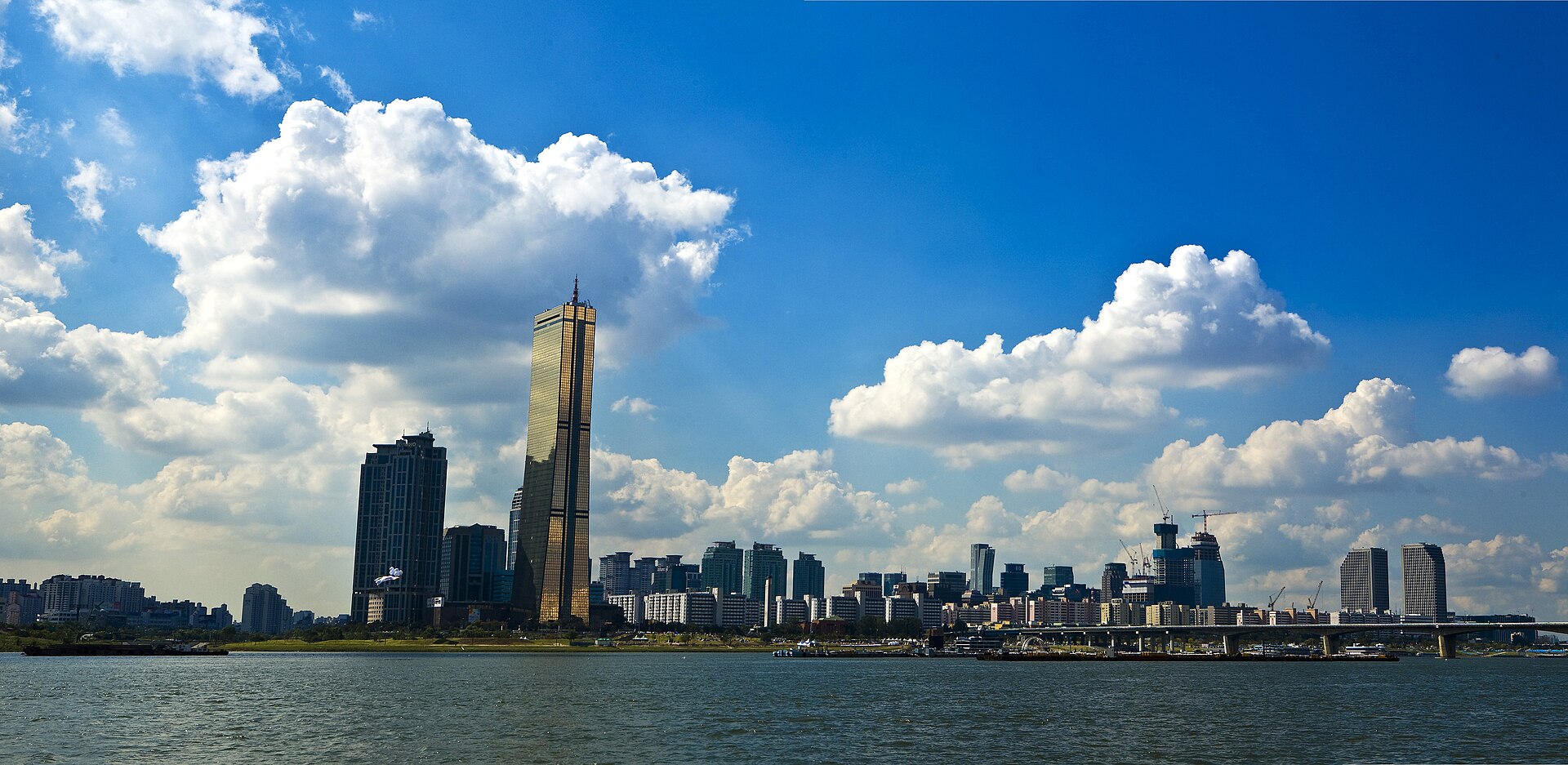
Seoul is South Korea's capital, spread across both banks of the Han River. The historic palace city lies north of the river around Jongno, Gwanghwamun and Namsa...
Photograph · USAGI_POST · CC0
Set your days, your pace and the hours you actually want to be out. The planner works around closing days and travel time, and leaves room to eat.
Reviewed by Elena Voss · Roavina Travel Editor
Seoul is South Korea's capital, spread across both banks of the Han River. The historic palace city lies north of the river around Jongno, Gwanghwamun and Namsan, while later commercial and residential centres extend south into Gangnam and east and west along the metropolitan rail corridors. The city is best approached as linked districts rather than one continuous centre: royal palaces and traditional neighbourhoods, central markets and museums, riverside areas, university quarters, and the newer southern business districts each form practical sightseeing clusters.
Checked 2026-08-26
September · September cools Seoul to a 26.2°C mean high, while rainfall falls to 141.5 mm over 9.1 days.
Ranked by importance — sitelinks, pageviews and heritage status, not editor preference.
101 places match
Category
Typical visit duration
Interests
경복궁
Gyeongbokgung was the first royal palace of the Joseon dynasty, established in 1395 a year after Hanyang, now Seoul, was chosen as the capital.
창덕궁
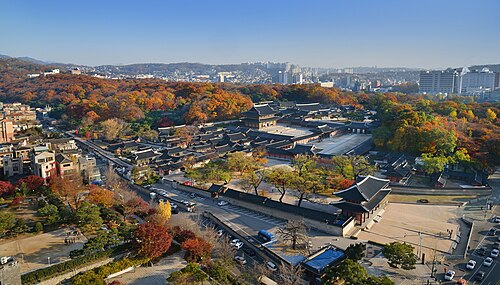
Changdeokgung was raised in 1405 as a secondary palace to Gyeongbokgung, and the garden on the slope behind it was laid out the following year.
북촌한옥마을 ДЕРЕВНЯ
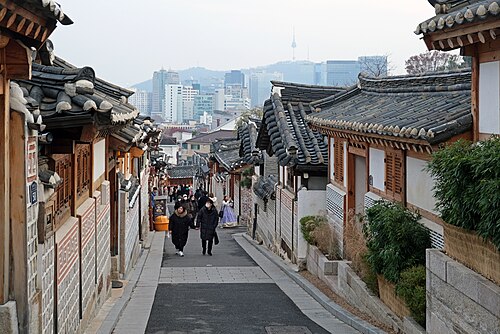
Bukchon is a lived-in neighbourhood rather than a museum village, and every rule a visitor meets there follows from that one fact.
남산서울타워
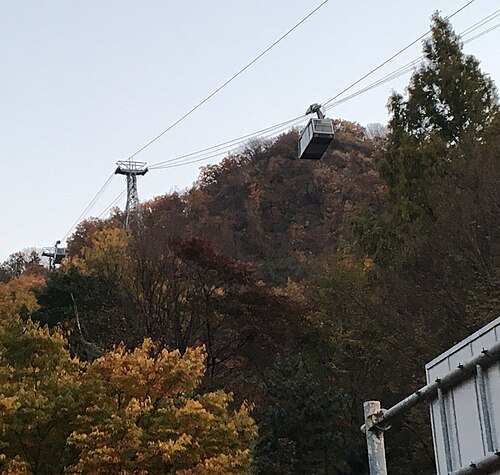
Namsan Seoul Tower is a working broadcast mast with an observation deck bolted onto it, standing on the summit of Namsan, the wooded hill that sits in the middle of central Seoul.
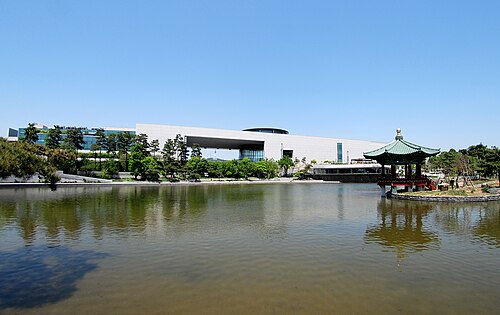
국립중앙박물관
The National Museum of Korea is the flagship museum of Korean history and art in Seoul. Established as a central institution for preserving and exhibiting Korea's cultural heritage, it stands as one of the largest museums in Asia.
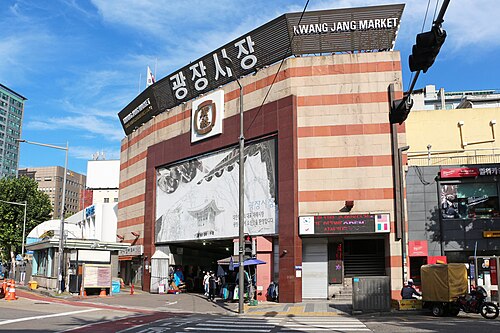
광장시장
Gwangjang Market fills a block of Jongno-gu at 88 Changgyeonggung-ro, on the ground between Jongno 4-ga and Yeji-dong, and its merchants describe it as the first permanent market in Korea.
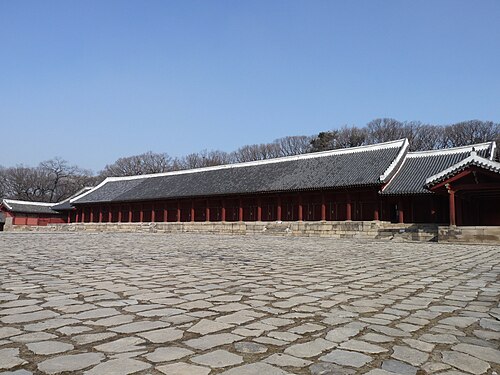
종묘
Jongmyo is the Confucian royal ancestral shrine of the Joseon dynasty, and it is a working ritual precinct rather than a temple or a palace.
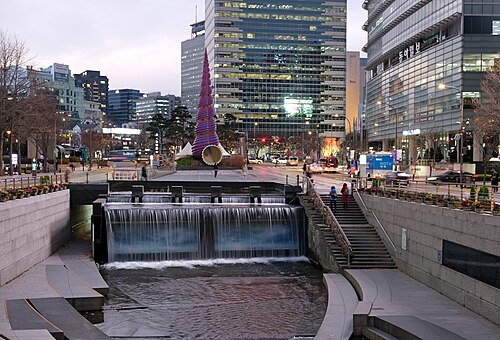
청계천공원
Cheonggyecheon is an 11-kilometre stream running through the middle of Seoul, sunk a storey below street level between Cheonggye Plaza and the Hangang River.
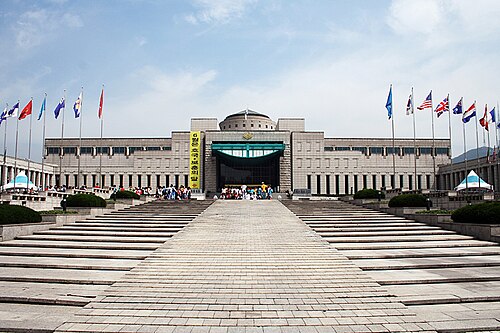
전쟁기념관
The War Memorial of Korea, known locally as 전쟁기념관, is a military museum and memorial in Seoul. It stands as a significant institution commemorating Korean military history and honoring those who served in conflicts.

Dongdaemun Design Plaza is a major independently entered design, exhibition and public-space complex with active programming. The local name is 동대문디자인플라자. It occupies a prominent position in Seoul's Dongdaemun district, an area historically associated with commerce and fashion.
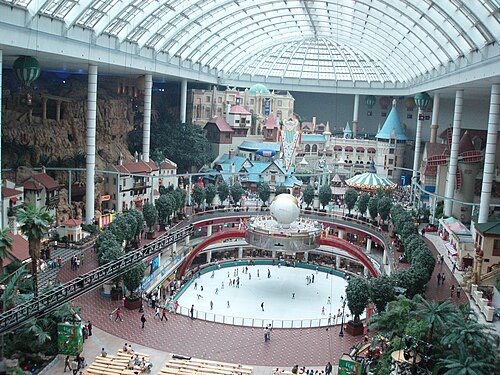
롯데월드
Lotte World is a major recreation complex in Seoul, South Korea. The local name is 롯데월드. It comprises both indoor and outdoor facilities, with the indoor portion known as Lotte World Adventure and the outdoor portion called Magic Island.
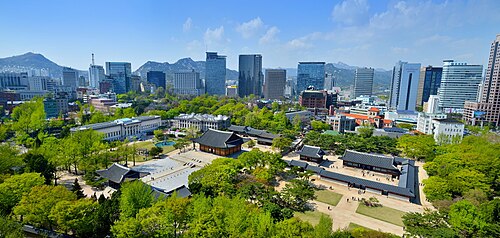
덕수궁
Deoksugung is the palace of the Korean Empire, and the Royal Palaces and Tombs Center's own history of it is unusually blunt about how it became one.
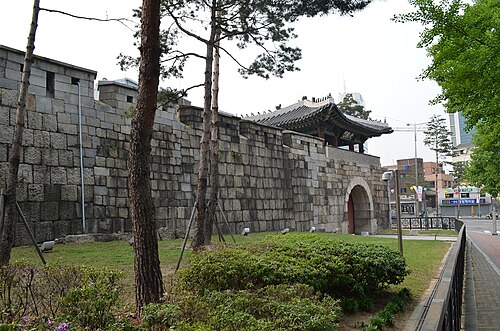
서울한양도성
The Seoul City Wall, known locally as 서울한양도성, is a historic fortification that originally enclosed the capital of the Joseon dynasty.
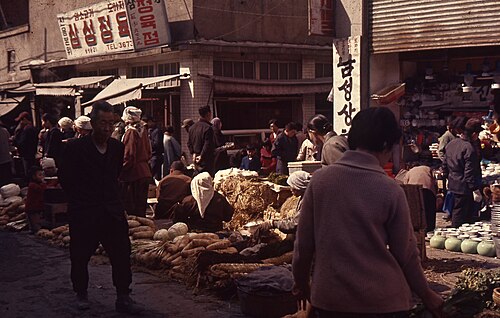
남대문시장
Namdaemun Market, known locally as 남대문시장, is a traditional market in Seoul, South Korea. It stands as one of the oldest and largest retail markets in the country, with a history stretching back centuries.
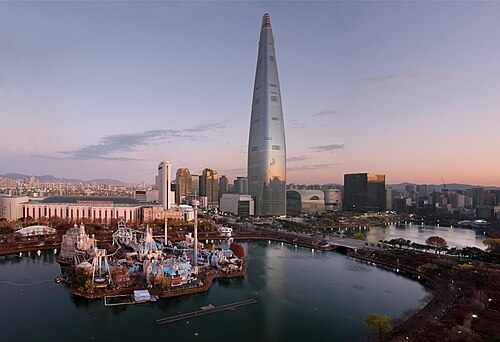
롯데월드타워
Lotte World Tower is a supertall skyscraper in Seoul, South Korea, bearing the local name 롯데월드타워. It stands as a landmark in the Songpa District and serves multiple functions including commercial, retail, and observation purposes.
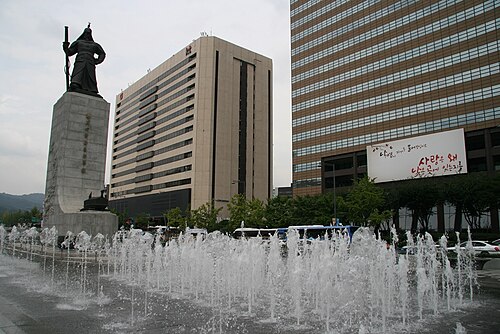
광화문광장
Gwanghwamun Plaza is a major public open space in central Seoul, South Korea. The plaza sits in front of Gwanghwamun, the main gate of Gyeongbokgung Palace, the largest of the Five Grand Palaces built during the Joseon Dynasty.
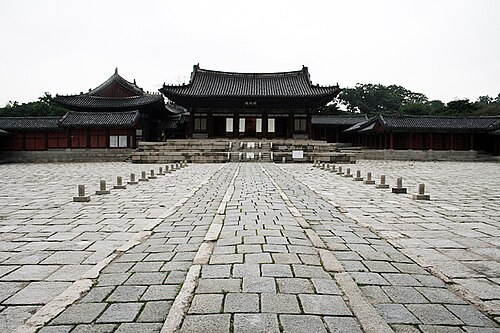
창경궁
Changgyeonggung is a Joseon dynasty palace located in Seoul, South Korea. Its local name is 창경궁. The palace was originally built in the 15th century and served as a royal residence.
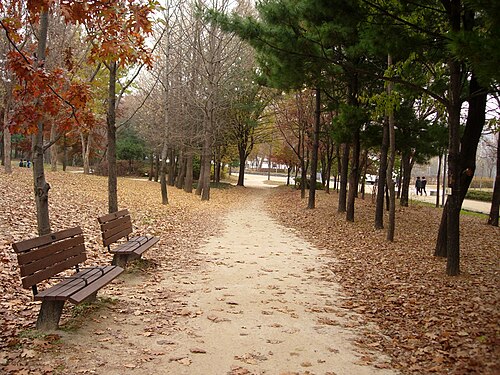
서울숲
Seoul Forest is a major urban park located in Seongdong-gu, Seoul, South Korea. The local name is 서울숲. It was developed on former landfill and industrial sites, transforming degraded land into substantial green space.
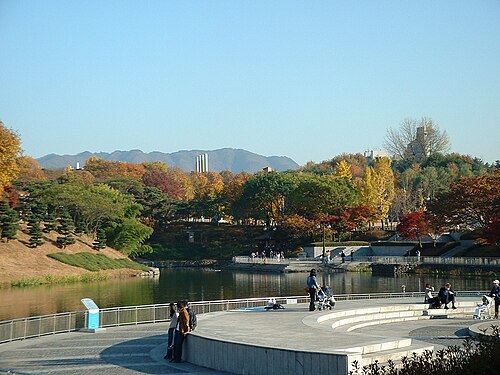
올림픽공원
Olympic Park is a major public park in Seoul, South Korea, established for the 1988 Summer Olympics. The local name is 올림픽공원. It occupies a large site in the Songpa-gu district and serves as a legacy venue from the Games.
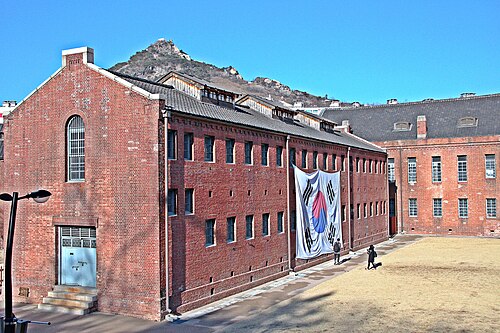
서대문형무소역사관
Seodaemun Prison History Hall is a former colonial-era penitentiary turned museum in Seoul, South Korea. The site was constructed during Japanese rule and later used by subsequent governments.
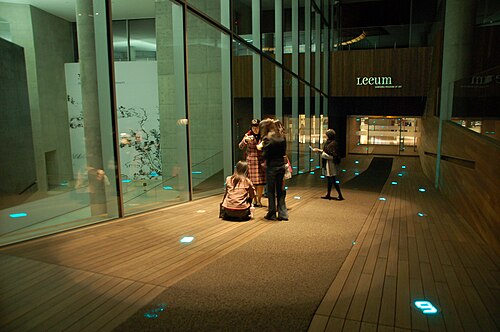
Leeum
Leeum, Samsung Museum of Art is a private art museum in Seoul, South Korea. Established by the Samsung Foundation of Culture, it houses collections of traditional Korean art and contemporary international works.
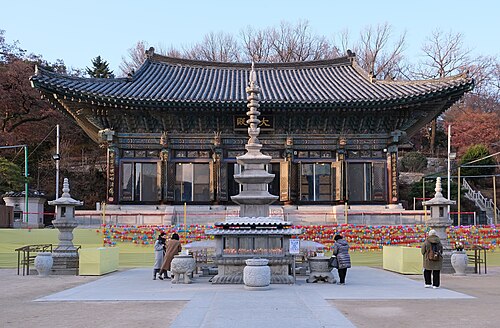
봉은사
Bongeunsa is a Buddhist temple located in Seoul, South Korea. Its local name is 봉은사. The temple stands as a significant religious and cultural site within the modern urban environment of the Gangnam district.
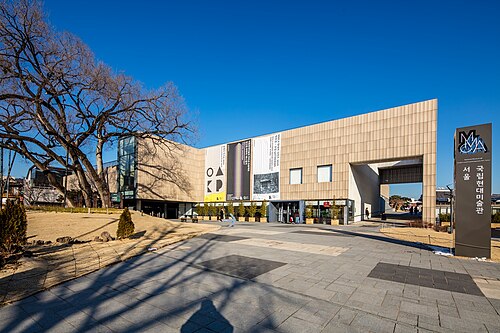
국립현대미술관 서울관
The National Museum of Modern and Contemporary Art, Seoul (MMCA Seoul) is a branch of South Korea's national museum system dedicated to contemporary art. Located in the Samcheong-dong area near Gyeongbokgung Palace, it occupies a renovated military compound.
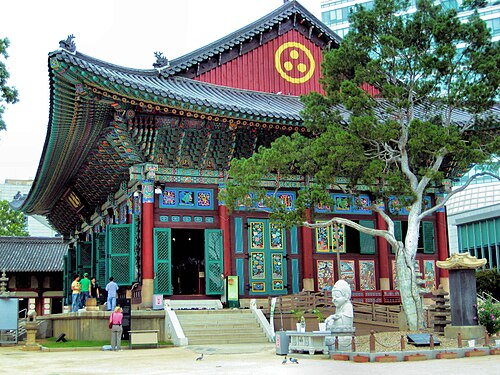
조계사
Jogyesa is a major Buddhist temple in Seoul, South Korea, serving as the chief temple of the Jogye Order of Korean Buddhism. It stands in the Jongno district near Insadong.
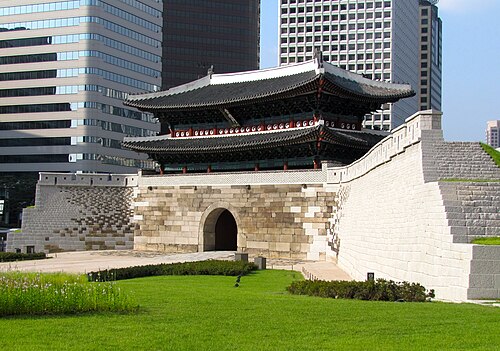
숭례문
Namdaemun, officially named Sungnyemun, is a historic gate located in Seoul, South Korea. Its local name is 숭례문. The structure is designated as National Treasure No.
The Han River is the clearest dividing line. North of it, the palace-and-Namsan core includes Gwanghwamun, Jongno, Bukchon, Insadong, Dongdaemun and Myeongdong. Westward, Hongdae and the university districts form another cluster; Yeouido occupies an island in the river. South of the Han, Gangnam, Apgujeong and Samseong are modern commercial areas with their own attractions. Seoul's official visitor maps divide suggested routes into the downtown palace and Namsan area, Apgujeong, Gangnam and Samseong, which is a useful way to avoid repeated cross-city travel.
Checked 2026-08-26
Use the subway as the default between districts and walk within each cluster. Stations and lines are colour-coded, exits are numbered, and major information appears in Korean and English. A Tmoney transport card can be used across the network; single-journey passes are also available from station machines. Buses reach areas beyond convenient rail stops, but the official visitor guide notes that they can be harder for first-time visitors despite colour-coded route types. Check the official transport page for current operating information before travel.
Checked 2026-08-26
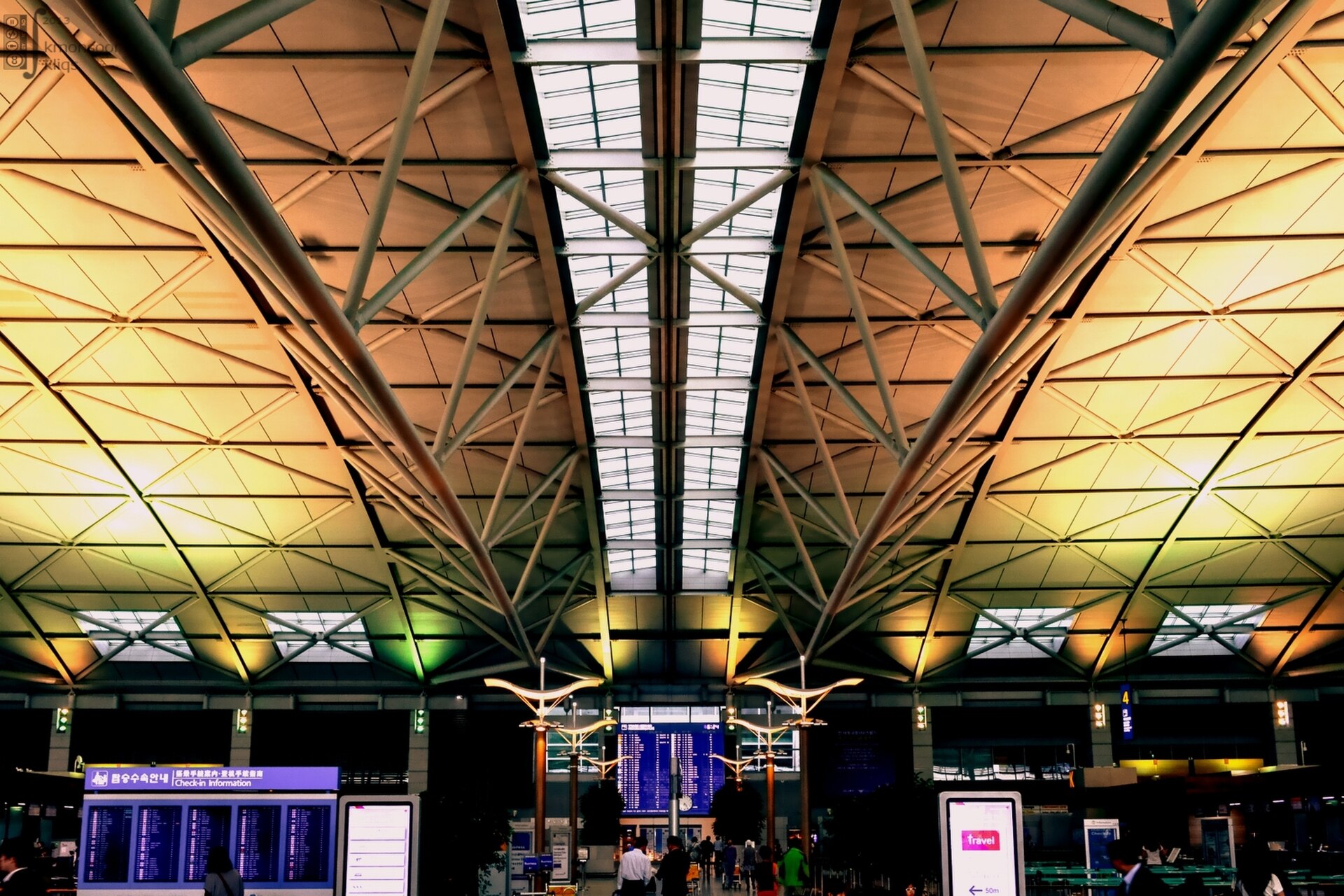
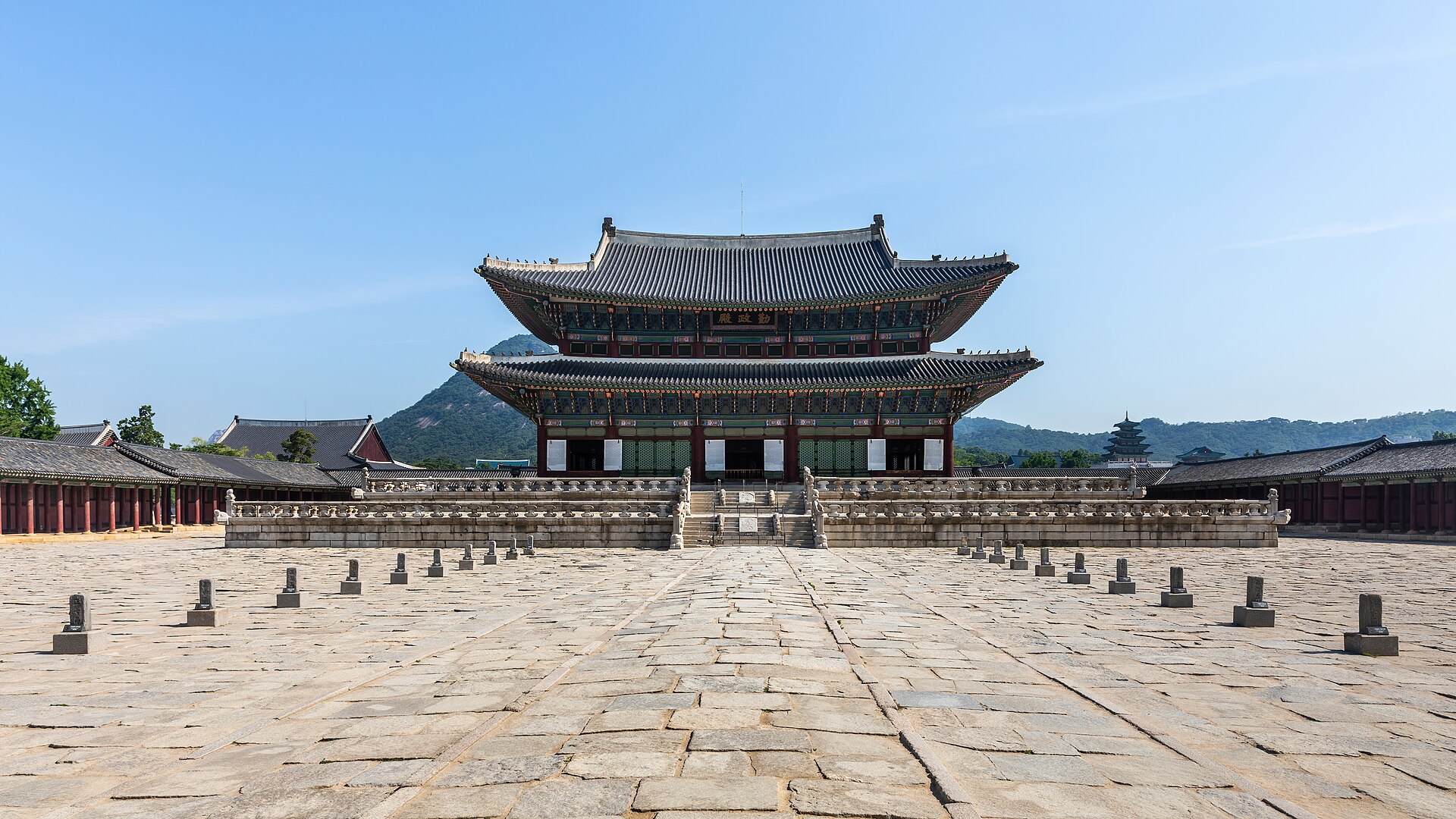
A fixed stay length is not recorded. Allocate time by district: the palace core, central markets and museums, a western neighbourhood such as Hongdae, and the southern districts if they match your interests.
The Han River. The older palace city and Namsan are north of it, while Gangnam, Apgujeong and Samseong form major visitor clusters on the south side.
Yes. Lines are colour-coded, station exits are numbered, and major signs use Korean and English. The official tourism guide recommends the subway as one of the most efficient ways to cross the city.
Use the subway for most cross-city journeys. Buses are useful for areas between stations, but route information can be less intuitive for a first visit even though services are colour-coded.
No. They sit in different city clusters on opposite sides of the Han River. Use the subway between them and reserve walking for the sights within each district.

