Sant Pau Art Nouveau Site
Hospital de la Santa Creu i Sant Pau
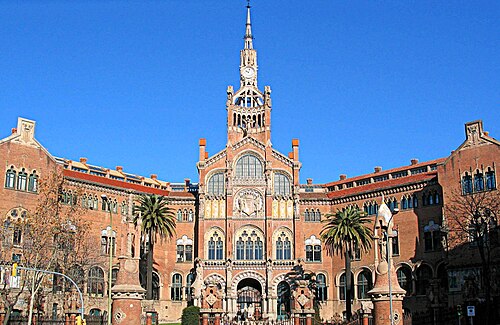
Sant Pau Recinte Modernista is the hospital Barcelona built when its medieval one gave out, and it is now visited as architecture rather than used as a ward.
- Must see
- Historic monument
City guide · Spain
Barcelona is Catalonia's capital on Spain's Mediterranean coast. Its visitor core combines the irregular lanes of Ciutat Vella, the nineteenth-century Eixample...
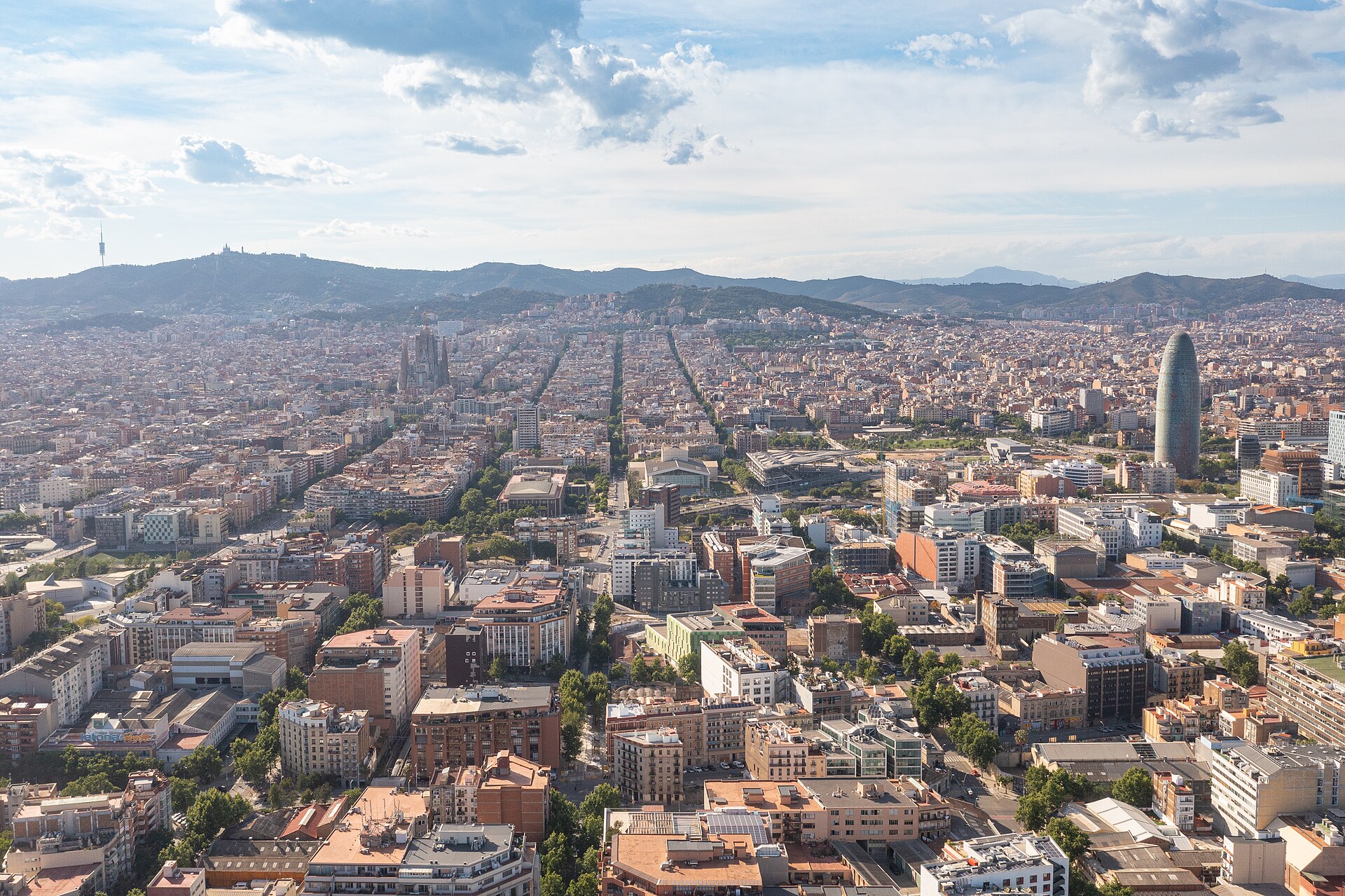
Photograph · dronepicr · CC BY 2.0
Set your days, your pace and the hours you actually want to be out. The planner works around closing days and travel time, and leaves room to eat.
Reviewed by Elena Voss · Roavina Travel Editor
Barcelona is Catalonia's capital on Spain's Mediterranean coast. Its visitor core combines the irregular lanes of Ciutat Vella, the nineteenth-century Eixample grid, the waterfront at Barceloneta, and the cultural sites on Montjuïc. Catalan and Spanish are both used across the city, while signs and place names commonly appear first in Catalan. The ranked attractions span Roman and medieval streets, Modernista architecture, markets, museums, beaches, and hilltop viewpoints rather than a single compact monument zone.
Checked 2026-08-26
September · September stays warm in Barcelona at 26.0°C by day while rain rises to 81 mm; thunderstorms average 3.5 days, matching August.
Ranked by importance — sitelinks, pageviews and heritage status, not editor preference.
75 places match
Category
Typical visit duration
Hospital de la Santa Creu i Sant Pau
Sant Pau Recinte Modernista is the hospital Barcelona built when its medieval one gave out, and it is now visited as architecture rather than used as a ward.
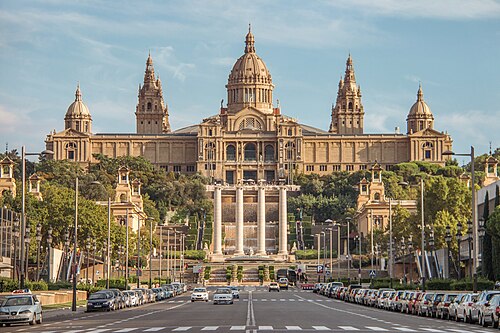
Museu Nacional d'Art de Catalunya
The Museu Nacional d'Art de Catalunya occupies the Palau Nacional, the domed building that stands at the head of Montjuïc above Plaça Espanya. The palace was not built as a museum.
Fundació Joan Miró
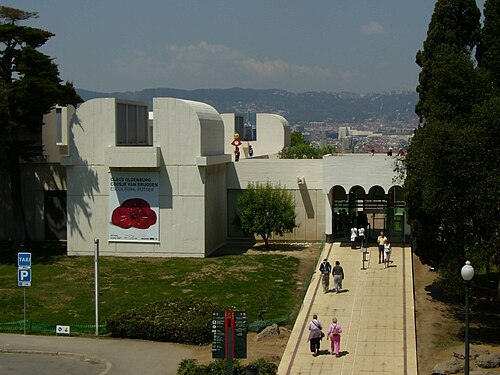
The Fundació Joan Miró is a museum of modern art on Montjuïc hill in Barcelona. Established by the Catalan artist Joan Miró, it houses one of the world's most comprehensive collections of his work.
Font Màgica de Montjuïc
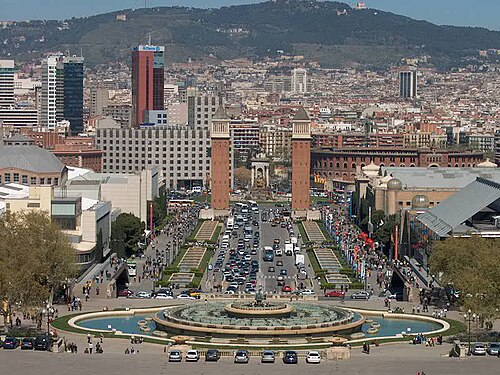
The Magic Fountain of Montjuïc, known locally as Font Màgica de Montjuïc, stands as a prominent ornamental fountain in Barcelona, Spain.
Castell de Montjuïc
Montjuïc Castle, known locally as Castell de Montjuïc, is a historic fortress situated atop Montjuïc hill overlooking Barcelona and its port. The military structure occupies a strategic position that has been fortified since the 17th century.
Basílica de Santa Maria del Mar
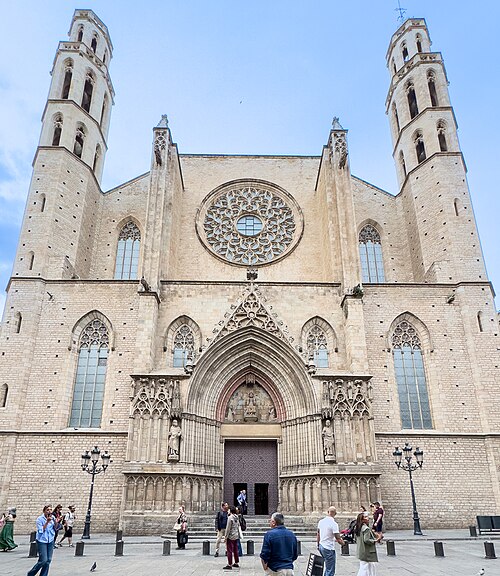
The Basilica of Santa Maria del Mar stands in Barcelona's Ribera district as a Catalan Gothic church built between 1329 and 1383. Constructed by the local maritime community, it represents pure Catalan Gothic style without later decorative additions.
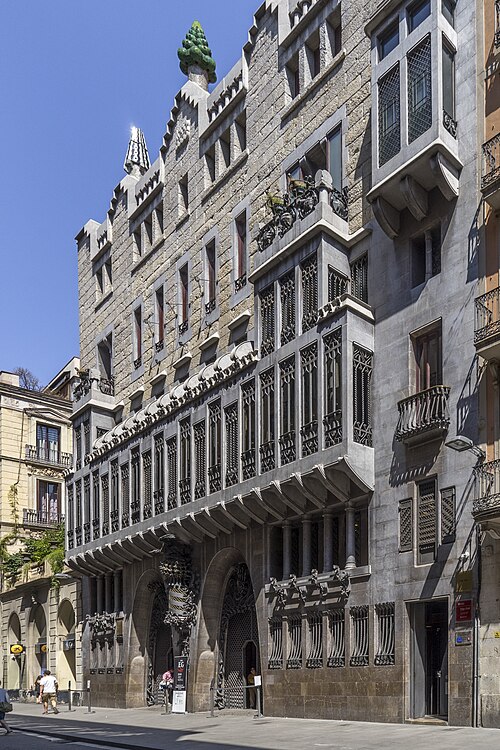
Palau Güell is a mansion designed by Antoni Gaudí in Barcelona, Catalonia, Spain. It was built between 1886 and 1890 for Eusebi Güell, a wealthy industrialist and Gaudí's most important patron.
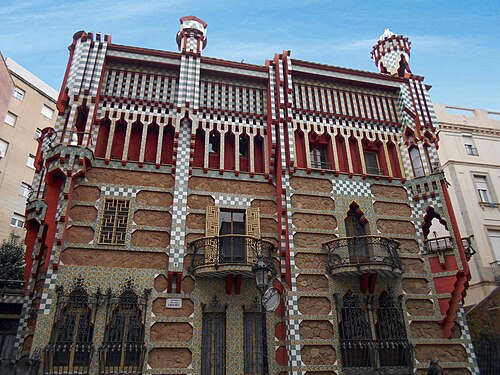
Casa Vicens is a historic house in Barcelona, recognized as one of the earliest major works of architect Antoni Gaudí.
Poble Espanyol de Barcelona
Poble Espanyol is an open-air architectural museum in Barcelona. Built for the 1929 Barcelona International Exposition, it occupies a prominent position on Montjuïc hill. The complex contains 117 full-scale buildings representing architectural styles from across Spain's regions.
Museu d'Art Contemporani de Barcelona
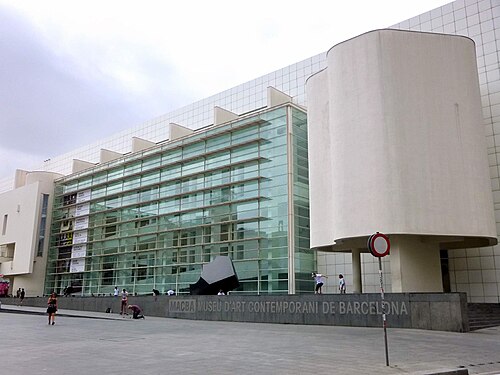
MACBA is the Museu d'Art Contemporani de Barcelona, a major museum dedicated to contemporary art in the El Raval district. It occupies a striking white building designed by American architect Richard Meier, opened in 1995.
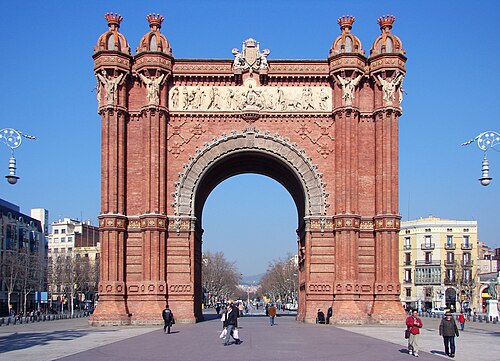
The Arc de Triomf is a triumphal arch in Barcelona, Catalonia, Spain. It was built as the main access gate for the 1888 Barcelona World Fair.
Pavelló Mies van der Rohe
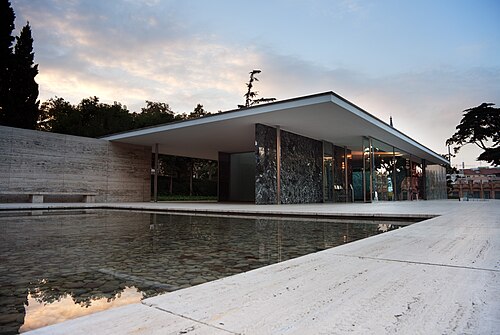
The German Pavilion, or Pavelló Mies van der Rohe, was created as Germany’s national pavilion for the 1929 Barcelona International Exposition.
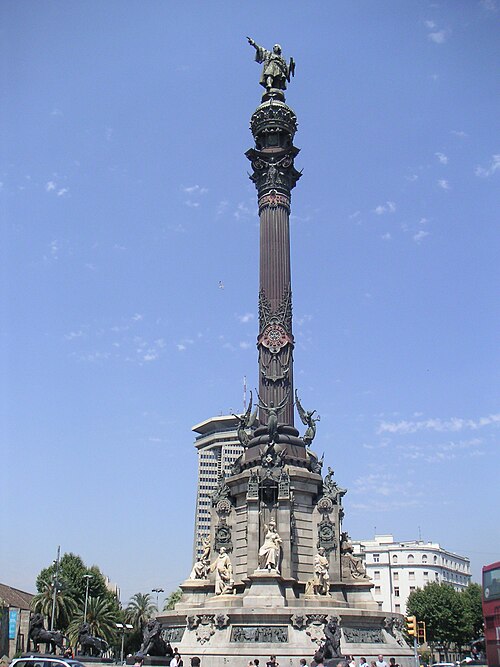
Monument a Colom
The Columbus Monument, or Monument a Colom, rises at the lower end of La Rambla where Barcelona’s historic centre meets the waterfront.
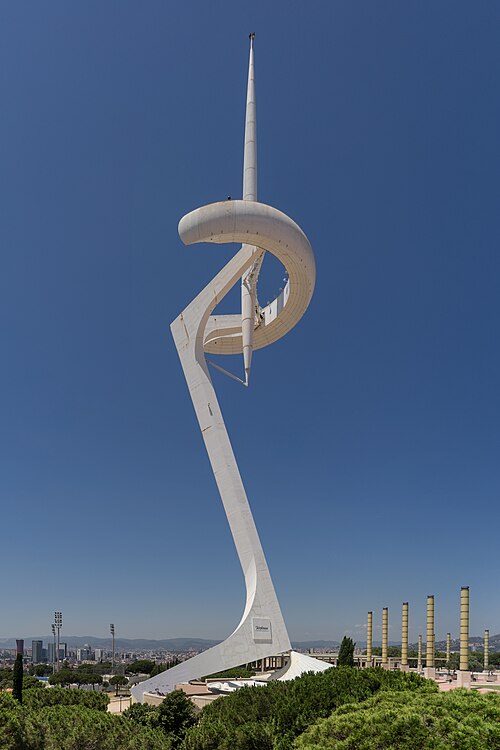
Torre de Comunicacions de Montjuïc
Torre de Comunicacions de Montjuïc is a telecommunications tower located on Montjuïc hill in Barcelona, Spain. Designed by architect Santiago Calatrava and completed for the 1992 Summer Olympics, it serves as a television and radio transmission tower.
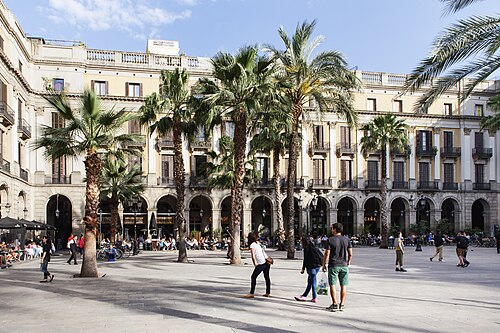
Plaça Reial
Royal Square, or Plaça Reial, is a nineteenth-century public square just off La Rambla in Barcelona’s Gothic Quarter.
Palau Nacional is a monumental building located on Montjuïc hill in Barcelona, Spain. It was constructed for the 1929 International Exposition and now serves as the main building of the Museu Nacional d'Art de Catalunya (MNAC).
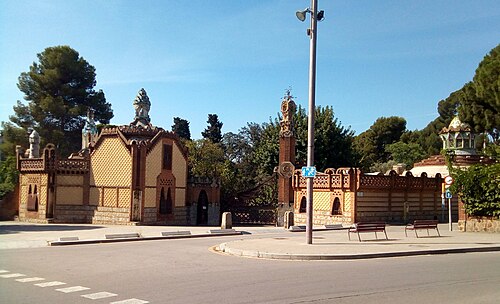
Pavellons Güell
The Güell Pavilions are a small Modernista complex in Barcelona, designed by Antoni Gaudí for Eusebi Güell. Built between 1884 and 1887, they served as the entrance and gatehouses to the Güell estate in the Les Corts district.
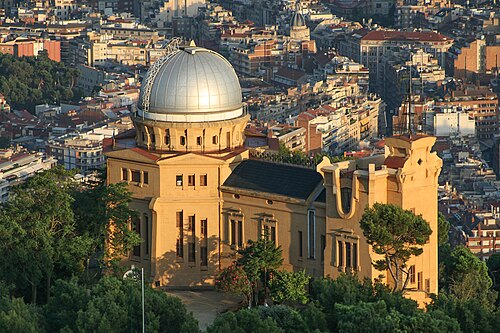
Observatori Fabra
Fabra Observatory, or Observatori Fabra, is a historic astronomical observatory on a hill above Barcelona. Its elevated setting combines scientific heritage with broad views over the city and surrounding landscape.
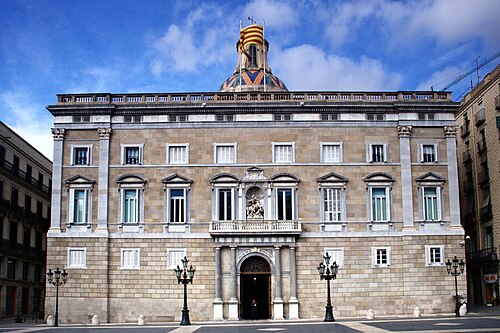
Palau de la Generalitat de Catalunya
Palau de la Generalitat de Catalunya serves as the seat of the Government of Catalonia. This historic palace stands in Barcelona's Gothic Quarter as one of the few medieval government buildings in Europe still used for its original purpose.
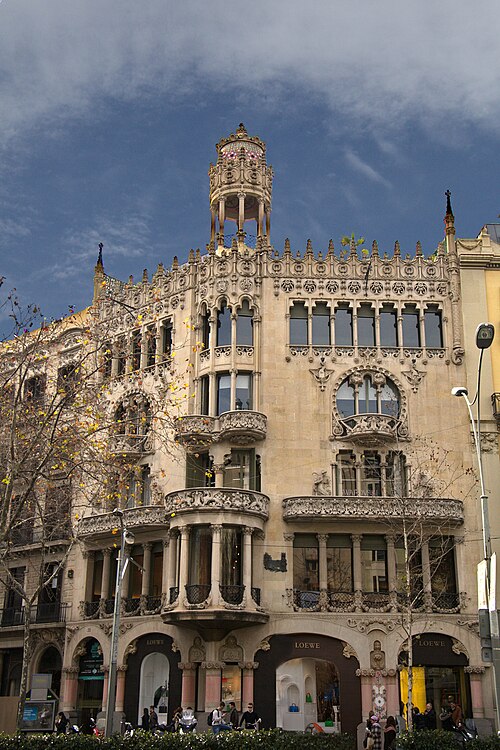
Casa Lleó Morera is a Modernista building on Passeig de Gràcia in Barcelona's Eixample district. Lluís Domènech i Montaner designed it, and construction took place between 1902 and 1906.
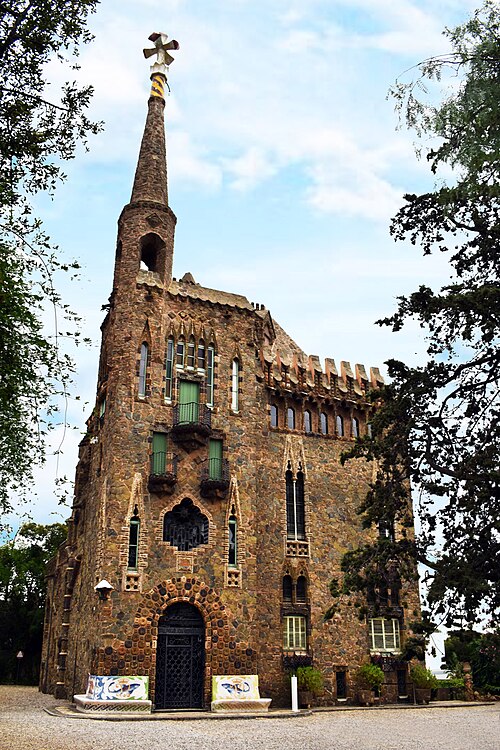
Torre Bellesguard
Bellesguard, known locally as Torre Bellesguard, is a modernist building in Barcelona designed by Antoni Gaudí. Constructed between 1900 and 1909, it stands on the site of a medieval castle once belonging to the Crown of Aragon.
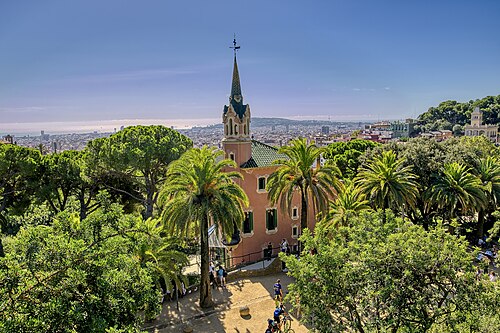
Casa Museu Gaudí
The Gaudi House Museum, locally known as Casa Museu Gaudí, stands within Park Güell in Barcelona. This building served as the residence of Antoni Gaudí, the celebrated Catalan architect, for nearly two decades.
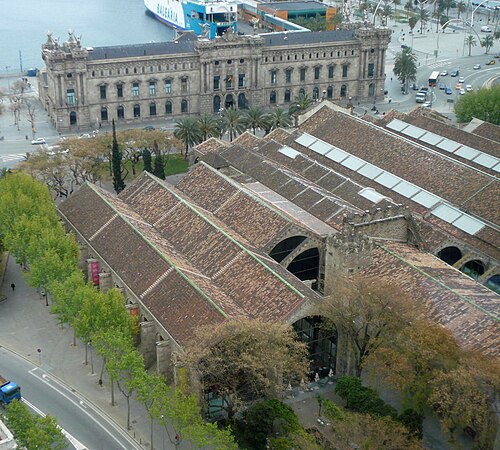
Drassanes Reials de Barcelona
The Barcelona Royal Shipyard, known locally as Drassanes Reials de Barcelona, is a historic maritime complex located near the port area of Barcelona, Catalonia, Spain.
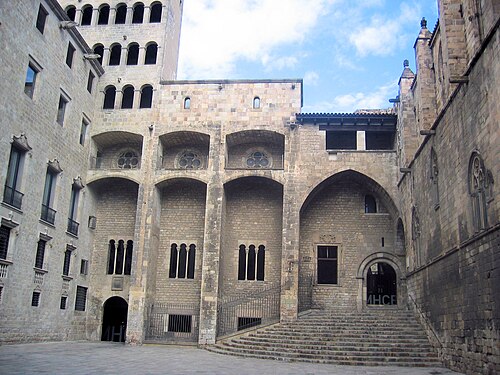
Palau Reial Major is Barcelona’s medieval royal palace complex on Plaça del Rei in the Gothic Quarter. The site was associated with the Counts of Barcelona and later the Kings of Aragon.
Les Quatre Columnes
The Four Columns, or Les Quatre Columnes, are a public monument at the foot of Montjuïc in Barcelona. Josep Puig i Cadafalch designed the original columns in 1919 as symbols of the four red stripes of the Catalan senyera.
Ciutat Vella is the historic nucleus beside the old harbour. La Rambla separates the Gothic Quarter and La Ribera from El Raval, while Barceloneta occupies the seaward edge. North of the old city, the broad Eixample grid carries much of Barcelona's Modernista architecture, including the Passeig de Gràcia corridor and the Sagrada Família area. Montjuïc rises southwest of the centre with museums, gardens and Olympic sites. Gràcia and Poblenou reward separate neighbourhood visits rather than being treated as extensions of the Gothic core.
Checked 2026-08-26
Walk within Ciutat Vella and along the central Eixample corridors, then use metro or bus between neighbourhood clusters. TMB operates the main urban network, and its metro connects the city's districts and principal visitor areas. Line 9 Sud links the airport with the metro system. The integrated visitor products described by TMB also cover buses and other participating services, but airport and regional journeys can have different ticket conditions. Check the operator's current route and fare information before choosing a pass.
Checked 2026-08-26
A fixed stay length is not recorded. Build the visit by clusters: Ciutat Vella and the waterfront, the Eixample Modernista sites, Montjuïc, then Gràcia or another outer neighbourhood if time remains.
Ciutat Vella contains the Gothic Quarter, La Ribera, El Raval and Barceloneta. It is compact enough to explore mainly on foot, although the lanes are irregular and major roads form useful boundaries.
Use the TMB metro for longer cross-city trips and walk within each sightseeing cluster. Buses are useful where a direct metro connection is inconvenient or where the street-level view matters.
Yes. TMB identifies Line 9 Sud as the airport connection into the metro network. Check the current ticket conditions because airport journeys can be treated differently from ordinary urban travel.
Treat Montjuïc as a separate cluster. Its museums, gardens, viewpoints and Olympic sites sit southwest of the historic centre and are better combined with dedicated transport than folded into a Ciutat Vella walk.