.jpeg)

01
1 hour
London Eye
The London Eye is a 135-metre observation wheel beside the Thames on London's South Bank.
- Must see
- Historic monument
- London Borough of Lambeth
City guide · United Kingdom
London is a five-borough-scale capital organised around the Thames, with the historic City and the West End forming two distinct centres. Most first visits comb...
Photograph · Ilya Grigorik · CC BY-SA 3.0
Set your days, your pace and the hours you actually want to be out. The planner works around closing days and travel time, and leaves room to eat.
Reviewed by Elena Voss · Roavina Travel Editor
London is a five-borough-scale capital organised around the Thames, with the historic City and the West End forming two distinct centres. Most first visits combine Westminster, the river, the major museums and the City, then use rail for places such as Greenwich, Kew or Hampstead. The useful planning rule is to group each day geographically: central stations can be close on foot, while crossing the wider city can absorb far more time than the Underground map suggests.
Checked 2026-08-26
September · September in London has mean high 20.0°C, mean low 11.4°C, rainfall 51.0 mm, and 8.6 rain days. A shower risk or cooler evenings are the manageable compromise. A mixed indoor-outdoor plan keeps a September visit to London comfortable.
Ranked by importance — sitelinks, pageviews and heritage status, not editor preference.
38 places match
Category
Typical visit duration
Interests
The London Eye is a 135-metre observation wheel beside the Thames on London's South Bank.
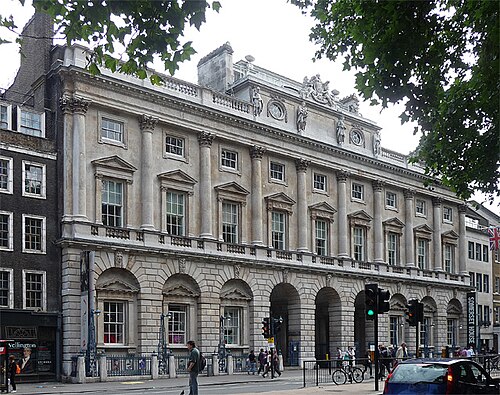
Somerset House is a large Neoclassical building situated on the south side of the Strand in central London, overlooking the River Thames. The structure serves as a major arts and cultural centre, housing various creative organisations, galleries, and public spaces.
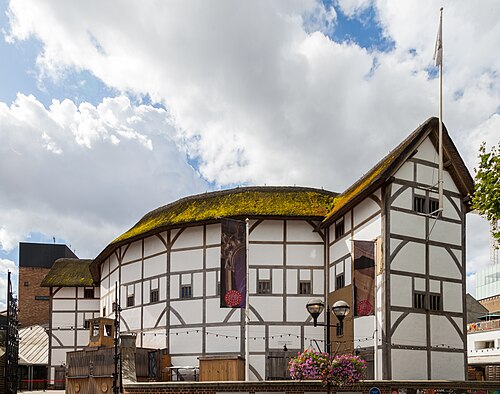
Shakespeare's Globe is a reconstruction of the original Globe Theatre, an Elizabethan playhouse associated with William Shakespeare. The modern building stands near the site of the original theatre in Southwark, London.
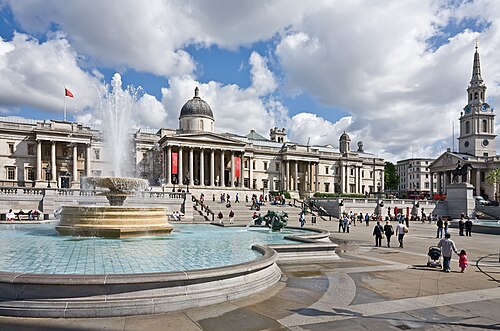
Trafalgar Square is the ceremonial public square at the top of Whitehall in the City of Westminster, owned by the King in Right of the Crown and managed by the Greater London Authority.
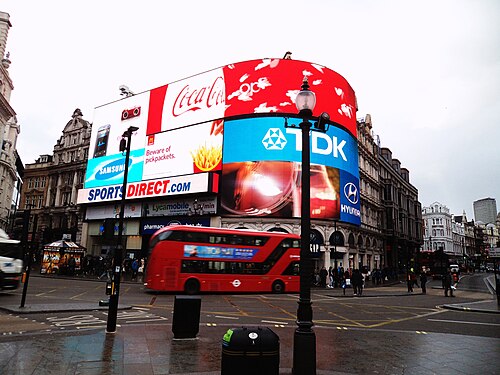
Piccadilly Circus is a road junction in the City of Westminster, not a building and not a site with a gate, and everything a visitor comes to see stands in or around the traffic.
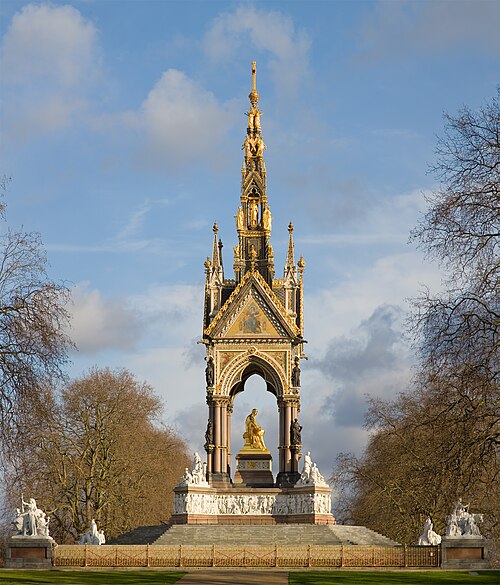
Kensington Gardens is one of the Royal Parks of London, situated immediately to the west of Hyde Park. The gardens were originally the private grounds of Kensington Palace, and were opened to the public in the nineteenth century.
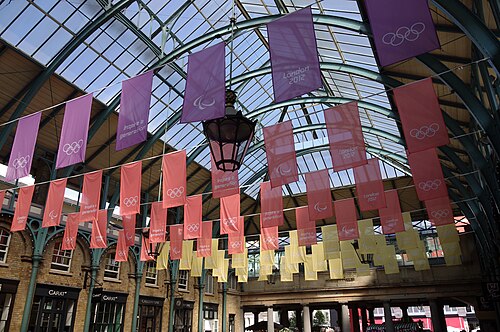
Covent Garden Market is a historic market building in London's West End. The structure occupies a prominent position in the Covent Garden district, an area with centuries of trading history.
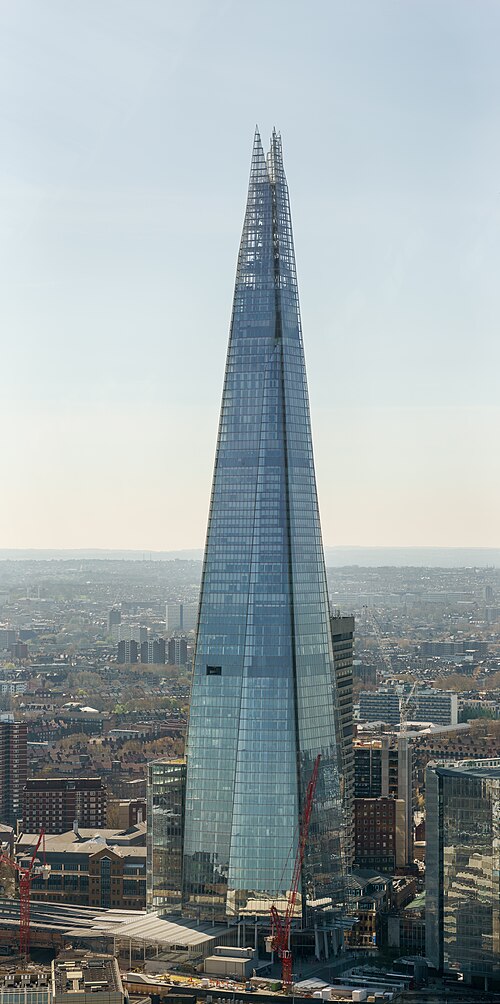
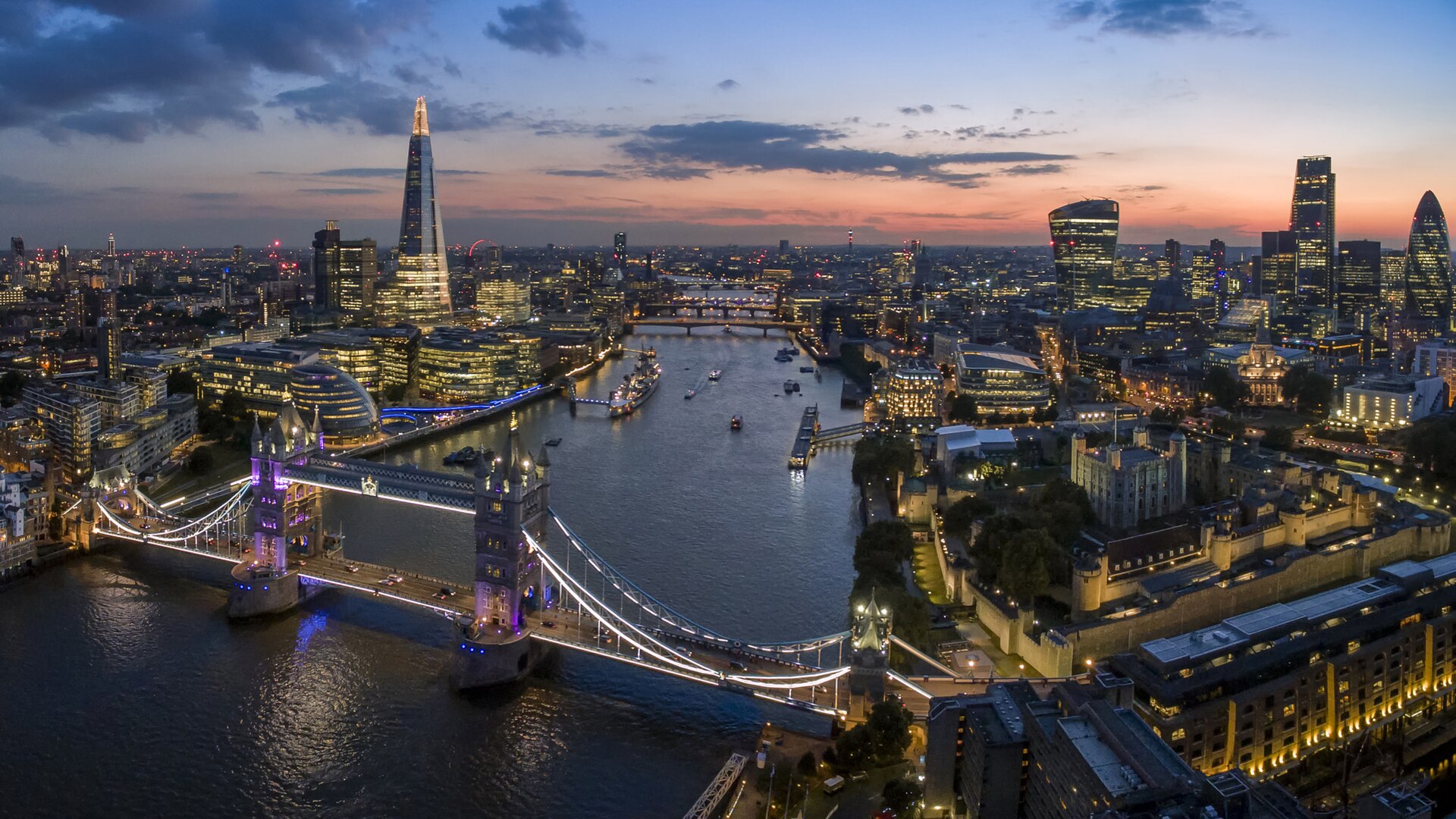
The Shard is a glass-clad skyscraper on the south bank of the River Thames, in London’s London Bridge Quarter.
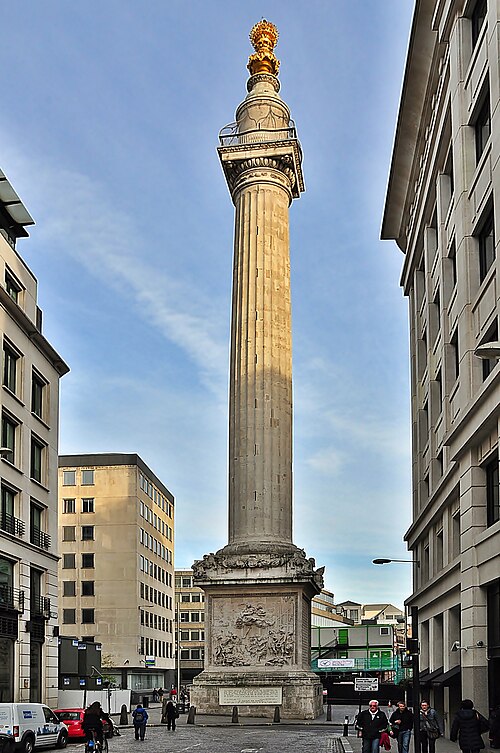
The Monument to the Great Fire of London
The Monument to the Great Fire of London is a Doric column near Pudding Lane in the City of London. Sir Christopher Wren and Robert Hooke designed it to commemorate the Great Fire of 1666 and the rebuilding that followed.

HMS Belfast is a Town-class light cruiser preserved as a museum ship on the River Thames. Launched in 1938, she served during the Second World War and the Korean War before decommissioning in 1963.
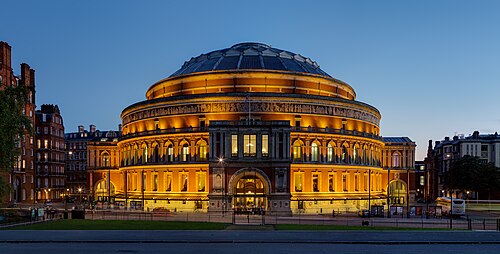
Royal Albert Hall is the circular concert hall on Kensington Gore in South Kensington, London. Queen Victoria opened it in 1871 and named it for Prince Albert.
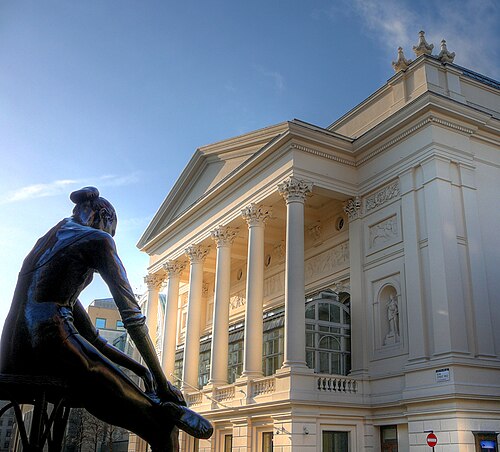
The Royal Opera House is a major performing arts venue in London's Covent Garden district. It serves as the home of The Royal Opera, The Royal Ballet, and the Orchestra of the Royal Opera House.
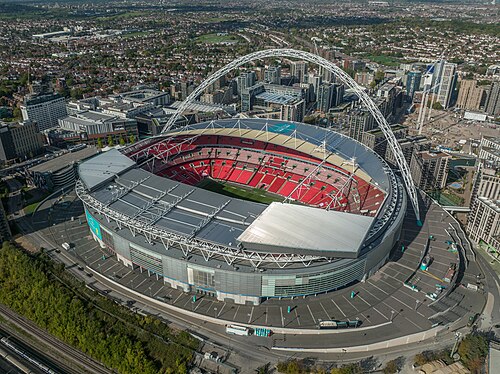
Wembley Stadium is England’s national football stadium in north-west London. The current building opened on the site of the original 1923 stadium after that structure was demolished in 2003.
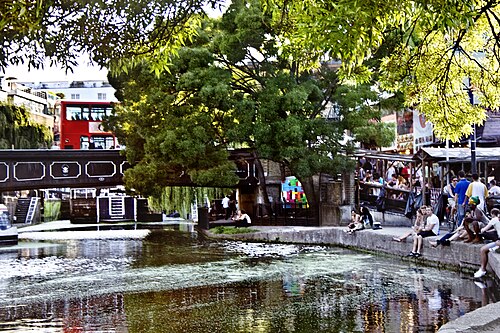
Camden Market
Camden Davidet is identified with Camden Market, a large collection of stalls, shops, and food vendors in Camden Town, London. The area is known for alternative fashion, vintage goods, crafts, artwork, international food, and a lively street atmosphere.
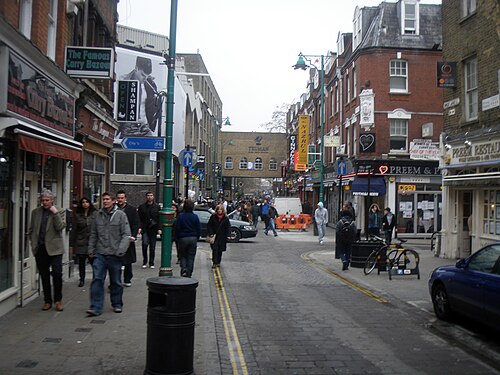
Brick Lane is an East London street running between Bethnal Green Road and Whitechapel High Street. It is the centre of the neighbourhood historically associated with London’s Bangladeshi community.
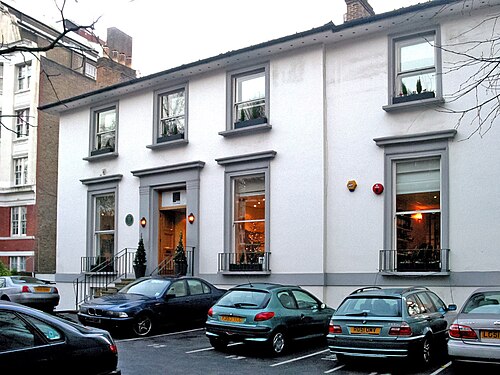
Abbey Road Studios is a world-famous recording studio in London, England. Established in 1931, it is most celebrated as the location where The Beatles recorded the majority of their albums, including the iconic "Abbey Road" album named after the street.
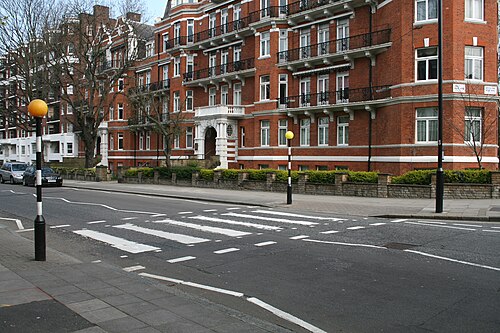
Abbey Road Crossing
Abbey Road zebra crossing is a working pedestrian crossing in St John’s Wood, London. It became globally recognisable after appearing on the cover of the Beatles’ 1969 album Abbey Road.
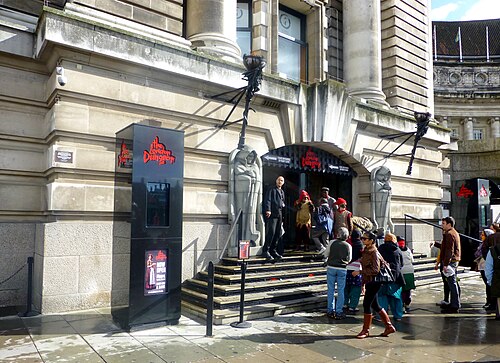
The London Dungeon
The London Dungeon is a theatrical attraction in central London built around darker episodes of British history. Actors, sets, sound, lighting and special effects turn stories of plague, fire, crime and notorious figures into an immersive performance.
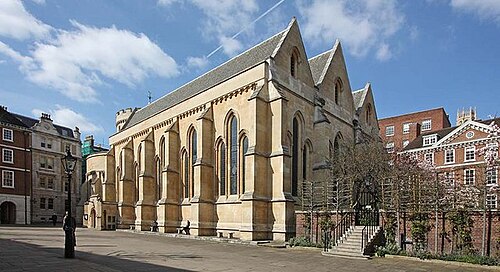
Temple Church is a historic chapel between Fleet Street and the River Thames in central London.

St Martin-in-the-Fields is an Anglican church located in the northeast corner of Trafalgar Square in central London. The building occupies a prominent position facing the National Gallery.

St Bartholomew-The Great
St Bartholomew-the-Great is a historic church in the City of London, founded in 1123 by Rahere, a courtier of Henry I. It is London's oldest surviving parish church, with substantial Norman fabric remaining despite later restorations.
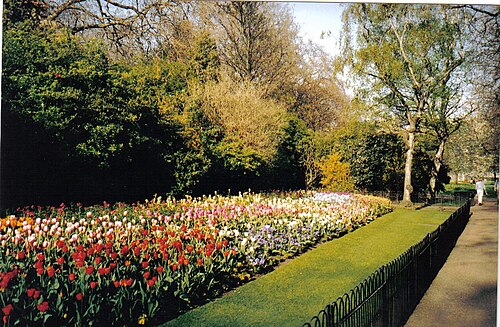
St. James's Park
St James's Park is a Royal Park in central London, located in the City of Westminster. It is the oldest of the capital's eight Royal Parks, with origins dating back to the Tudor period.
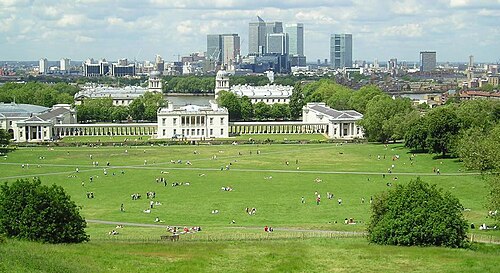
Greenwich Park is a historic royal park in southeast London, covering extensive hillside grounds. It forms part of the Greenwich World Heritage Site and contains the Prime Meridian line.
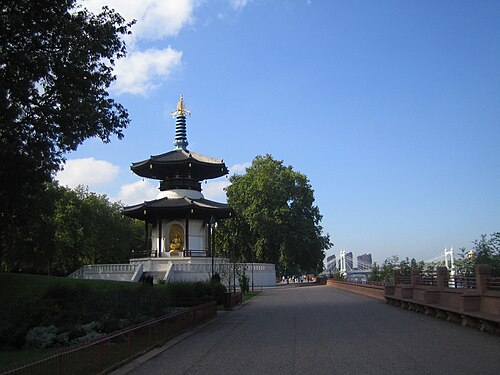
Battersea Park is a large Victorian riverside park on the south bank of the Thames in the London Borough of Wandsworth. Covering about 200 acres, it was laid out between 1855 and 1858 on the former Battersea Fields.

Kyoto Garden is a Japanese-style garden located within Holland Park in the Royal Borough of Kensington and Chelsea, London.
District boundaries come from OSM administrative relations, so a district page holds exactly the places inside it — plus, for the islands and the coast, the nearest district by proximity.
London has two centres rather than one, and the River Thames is the line everything else is measured against.
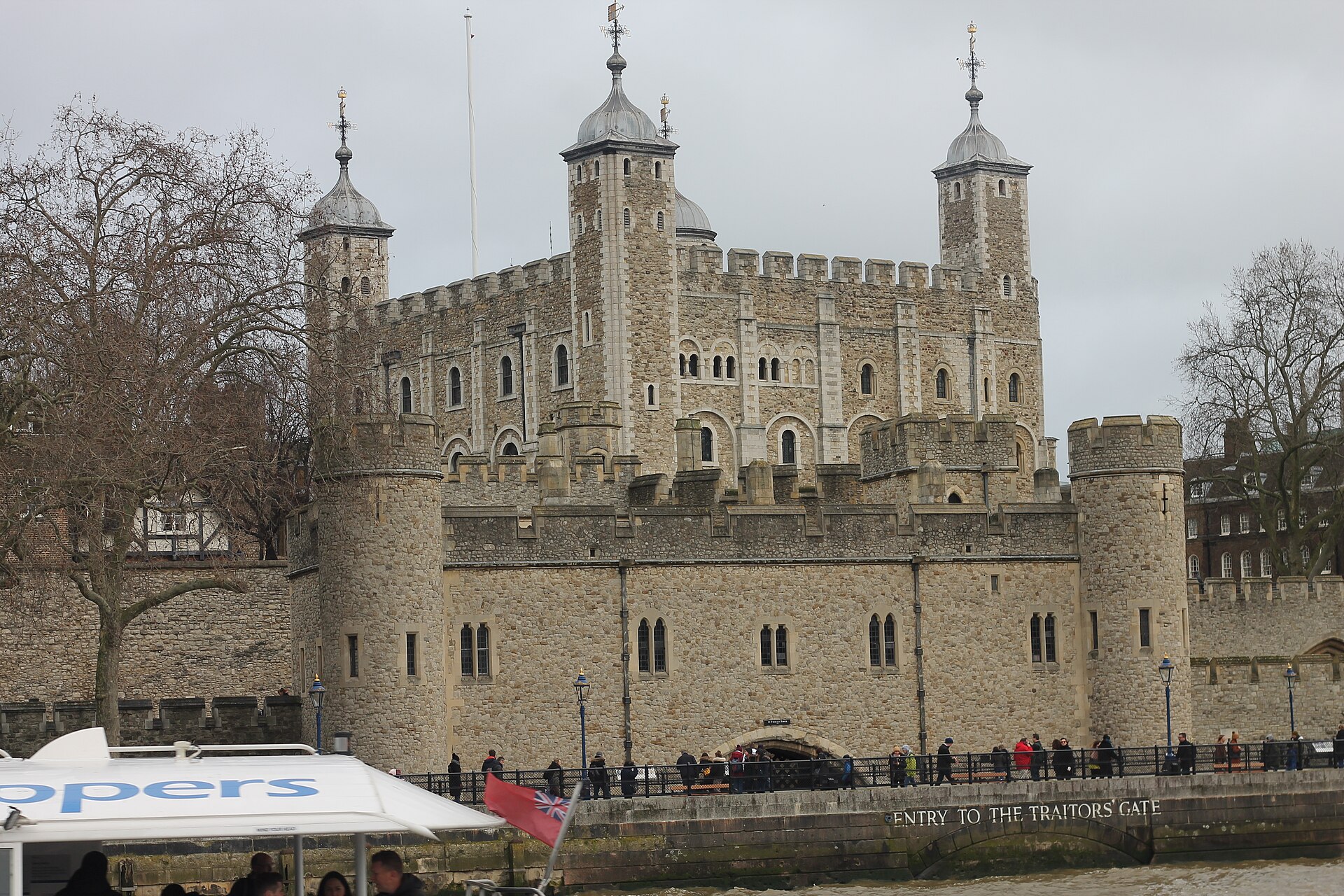
The City of London is the older of the two. It is the Roman and medieval core, it still holds its medieval boundaries, and it is not a London borough at all: it is a separate local authority governed by the City of London Corporation, the thirty-third authority alongside the thirty-two boroughs of Greater London. Today the Square Mile is banks, insurance, churches wedged between office towers, and the Tower of London at its eastern edge. It fills on weekday mornings and empties on Friday evening, which is why a Sunday spent there feels like a different city from a Tuesday.
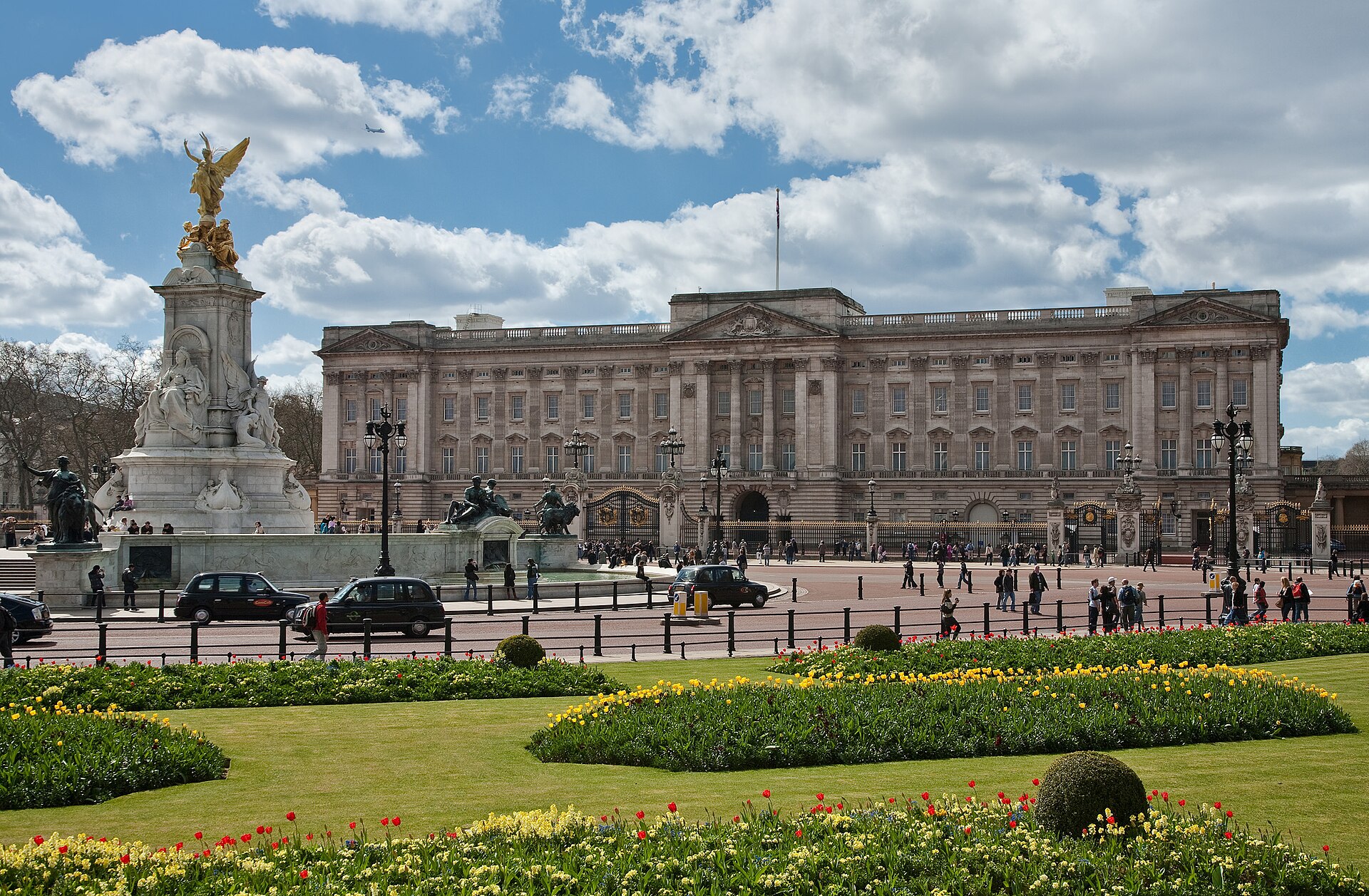
The West End, two to three kilometres west, is the other centre and the one a visitor actually lives in. The City of Westminster holds Parliament, Westminster Abbey and Buckingham Palace; north and east of them are Soho, Covent Garden, Mayfair and the theatres; west of them are the South Kensington museums and Hyde Park. Most first visits sleep in the West End and make trips into the City, not the other way round.
The river sorts the rest. The north bank carries most of what a short visit comes for — Westminster, the West End, the City, the Tower. The south bank carries one dense riverside strip and then stops: the London Eye, the Southbank Centre, the National Theatre, Tate Modern, Shakespeare's Globe and Borough Market stand in a line that is walkable end to end in an hour or so, and a few streets behind it the south turns residential.
The Circle line is the most useful mental boundary London offers. Nearly everything a three- or four-day visit wants sits inside that loop or a stop beyond it. Outside it, Greater London becomes thirty-two boroughs of housing, high streets and parks, with a handful of places worth a deliberate half-day each — Greenwich, Kew, Hampstead, Camden — reached by rail rather than stumbled upon.
Checked 2026-08-26
Pay with a contactless bank card or phone, use the Underground and the buses, and walk more than the tube map suggests.
Transport for London divides the network into fare zones 1 to 9, and the zones a journey touches set its price. Fares are charged at the peak rate on Monday to Friday between 06:30 and 09:30 and between 16:00 and 19:00, and off-peak at all other times, with the touch-in time deciding which applies. Tube, DLR, London Overground, Elizabeth line and most National Rail services inside London share one fare system, so a visitor rarely has to think about which operator runs the train.
Capping is the reason no visitor needs a travelcard. Pay as you go with the same card or device all day and TfL stops charging once the daily cap is reached: for 2026 the adult cap for Zones 1-2 is £8.90, peak or off-peak, and £16.30 for Zones 1-6, with a Monday-to-Sunday cap of £44.70 on Zones 1-2. Buses and trams cap separately and much lower — a single adult bus fare is £1.75 with a £5.25 daily cap, and the Hopper fare allows unlimited bus and tram journeys within an hour of touching in for that one £1.75. An Oyster card does the same job; contactless simply saves buying one.
Buses are slower than the Underground and better for seeing anything. They are the only mode where a visitor watches the city go past, and on short central hops they often win outright.
The Elizabeth line changed the geography of central London when it opened. It runs east-west deep beneath the centre, stopping at Paddington, Bond Street, Tottenham Court Road, Farringdon, Liverpool Street and Canary Wharf, and it reaches Heathrow directly. Its trains are longer and less frequent than a tube line's but far faster across the middle of the city.
Walk more than the map implies. The Underground diagram is a schematic, not a scale drawing, and central stations sit far closer together on the ground than on paper — Covent Garden to Leicester Square is a famously short walk between two stations one stop apart, and Bank, Monument, St Paul's and Cannon Street are all within a few minutes of each other. A journey of one or two stops in Zone 1 is usually quicker on foot than down the escalators and back up.
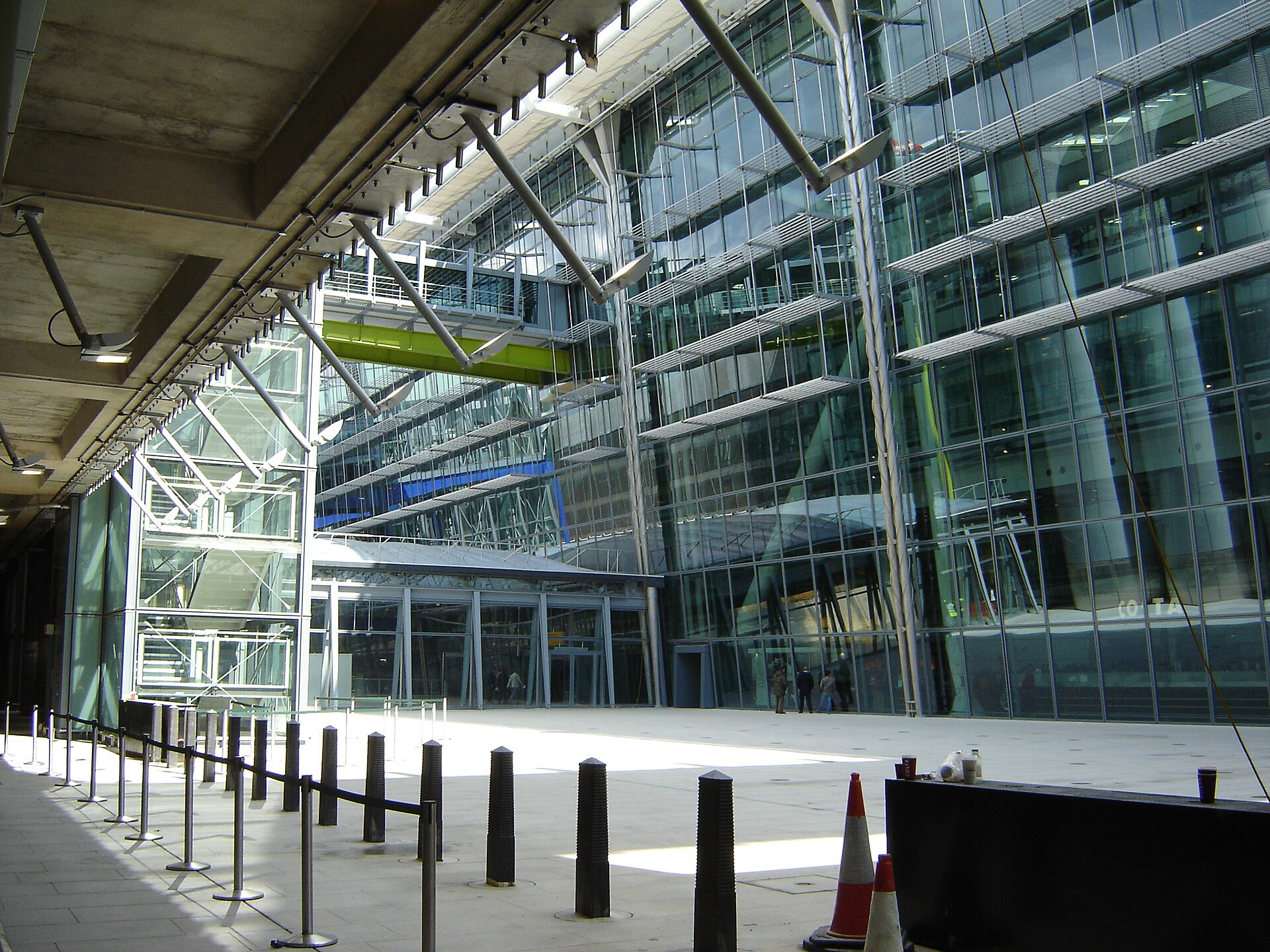
Airports are the part visitors underestimate. Heathrow is the closest by rail: the Piccadilly line reaches central London in about fifty minutes and runs between 05:00 and 23:30, while Heathrow Express covers Paddington to Terminals 2 and 3 in fifteen minutes. Gatwick, Stansted and Luton are outside London entirely and are reached by mainline rail from Victoria, Liverpool Street and St Pancras respectively, each of them a train ride of half an hour or more before the London journey even starts. Budget for the connection at the London end as well as the train, and never plan a same-morning arrival against a fixed booking.
Checked 2026-08-26

Four to five. Three days are enough for Westminster and the abbey, the West End and the river, and the City with the Tower of London at its edge. A fourth day buys the South Kensington museums or the British Museum at a pace that is not a forced march, and a fifth buys one place outside the centre — Greenwich, Kew or Hampstead. London punishes compression more than most capitals because its two centres sit kilometres apart and its best-known sights each absorb half a day rather than an hour.
May, June and September. London has a temperate oceanic climate in which precipitation is fairly evenly distributed all year round, so no month is reliably dry and choosing by rainfall is wasted effort. Choose by daylight and crowding instead: the long evenings of late spring and early summer give a visitor several extra usable hours a day, and September keeps most of that light after the school holidays have emptied out. Winter is dark by mid-afternoon, which shortens a sightseeing day more than the cold does.
Contactless is enough. A contactless bank card or a phone or watch wallet is accepted as pay as you go across the Underground, buses, trams, DLR, London Overground and the Elizabeth line at exactly the adult rate an Oyster card charges, and it caps in the same way. The only requirement is to touch in with the same card or device every time, because capping and the Hopper fare are worked out per card. An Oyster card is worth buying only for a traveller whose bank card charges foreign transaction fees, or for children needing a Zip photocard.
Less than most visitors expect, because Transport for London caps the daily total. For 2026 the adult pay-as-you-go cap is £8.90 a day for Zones 1-2 — the same figure peak or off-peak — and £16.30 for Zones 1-6, which covers Heathrow. Travelling only by bus and tram caps far lower, at £5.25 a day on a £1.75 single fare. There is also a Monday-to-Sunday cap of £44.70 on Zones 1-2. A visitor who stays in the centre and uses the tube freely will hit the Zone 1-2 cap on a heavy day and pay less on a light one, which is why buying a Travelcard in advance rarely saves anything.
Heathrow Express, if speed is the only consideration: Heathrow's own site gives fifteen minutes from Terminals 2 and 3 to London Paddington, with trains every fifteen minutes and tickets from £10, and Terminal 5 five minutes further. The Piccadilly line is the cheap alternative and reaches central London in about fifty minutes, running between 05:00 and 23:30 with Night Tube on Friday and Saturday, though it does not serve Terminal 4 at night. The Elizabeth line is the middle option, running direct from all Heathrow rail stations through Paddington and the centre to Liverpool Street and Canary Wharf. Heathrow Express is deliberately excluded from TfL's caps and Travelcards, so its fare is on top of whatever else the day costs.
Longer than the airport name suggests, because none of the three is in London. Gatwick's own site gives thirty minutes on the Gatwick Express from South Terminal to London Victoria, twice an hour. Stansted's own site gives fifty minutes on the Stansted Express to London Liverpool Street, every fifteen minutes, and warns that Oyster is not valid to or from Stansted even though contactless is. Luton adds a step: London Luton's own site gives under four minutes on the Luton DART shuttle between the terminal and Luton Airport Parkway station, and the mainline train to St Pancras International runs from there. To any of those figures a traveller must add the journey across London at the far end, which in rush hour is not the small part.
Somewhere inside or just outside the Circle line, on the north bank, within walking distance of a station served by more than one line. Bloomsbury, Fitzrovia, Covent Garden, Westminster and South Kensington all satisfy that and put a visitor inside the West End rather than commuting into it. The City of London is cheaper at weekends for a reason: it empties, and its restaurants close with it. Staying far out to save money trades the saving back in fares and in the hour a day spent underground, and London's evenings are the part a short visit loses first.


