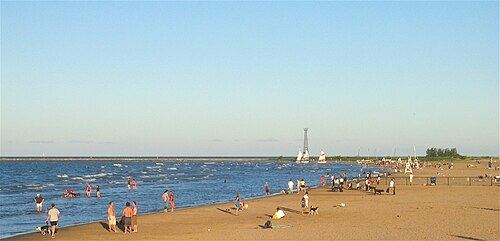
Montrose Avenue Beach
Montrose Beach
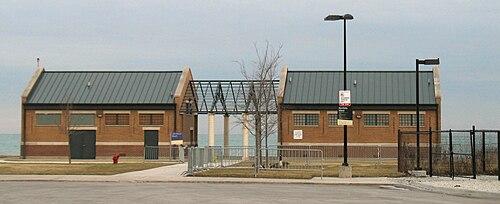
Montrose Beach is a public beach on the North Side of Chicago. It sits along Lake Michigan with adjacent natural areas that serve as bird habitat.
- Must see
- Nature site
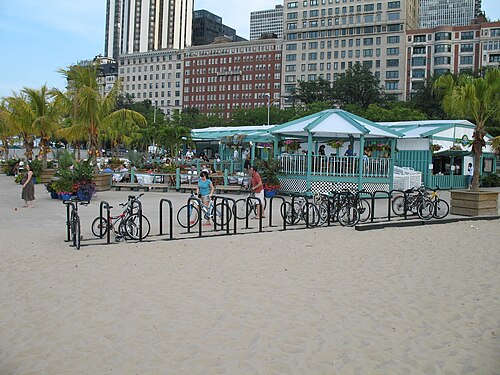
City guide · United States
Chicago is organised around Lake Michigan, the Chicago River and a regular street grid. The Loop contains the central business district, major architecture and...
Photograph · J. Crocker · Attribution
Set your days, your pace and the hours you actually want to be out. The planner works around closing days and travel time, and leaves room to eat.
Editorial responsibility: Elena Voss · Roavina Travel Editor
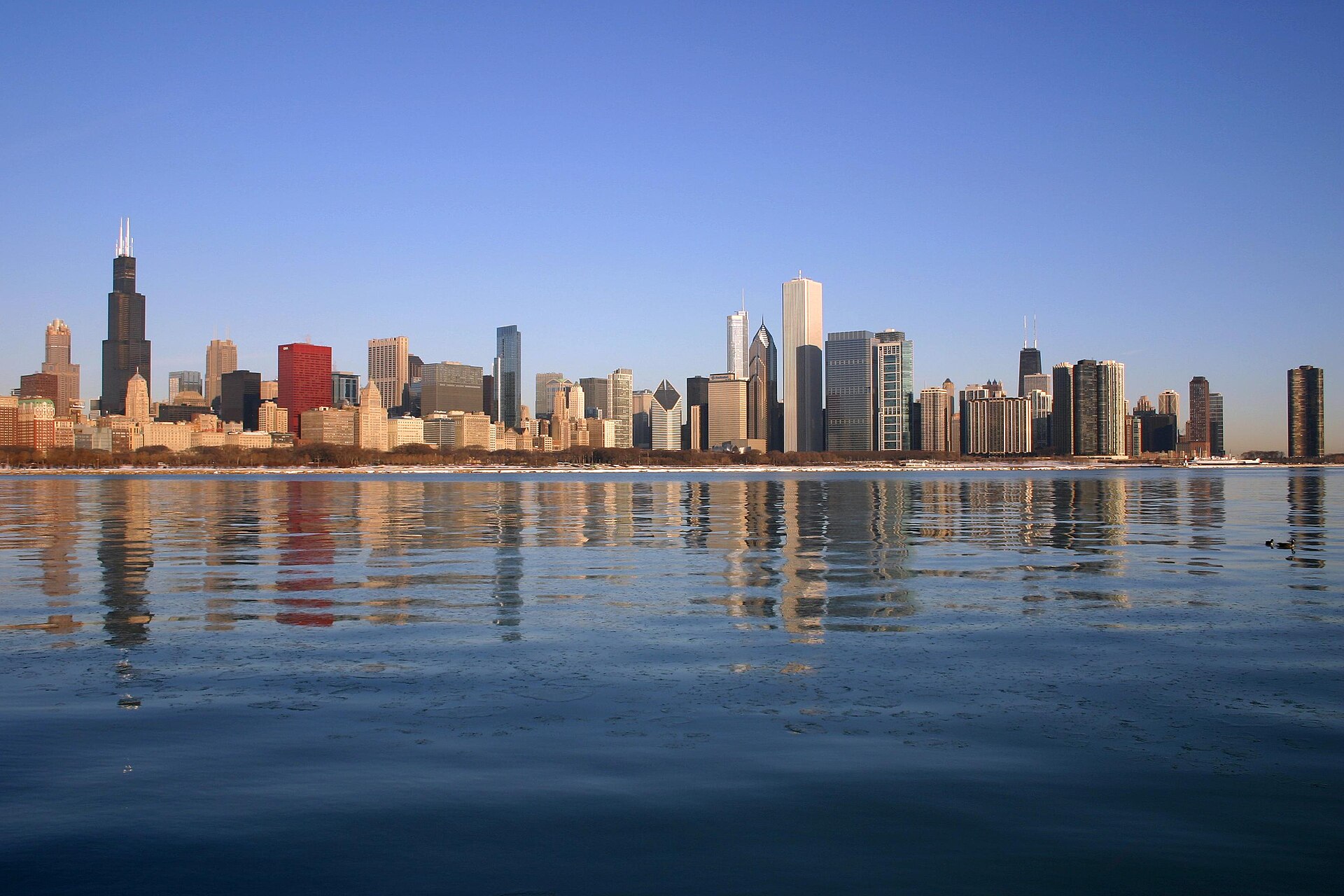
Chicago is organised around Lake Michigan, the Chicago River and a regular street grid. The Loop contains the central business district, major architecture and Millennium Park; museum campuses and lakefront parks extend south, while River North, Lincoln Park and neighbourhood centres continue north and west. A first visit works best when downtown sights are grouped together and separate time is reserved for one or two neighbourhoods beyond the Loop.
Checked 2026-08-26
November · November falls to a 48.4°F mean high in Chicago and averages 1.8 inches of snow, making cold-weather flexibility important.
Ranked by importance — sitelinks, pageviews and heritage status, not editor preference.
56 places match
Category
Typical visit duration
Good for
Interests
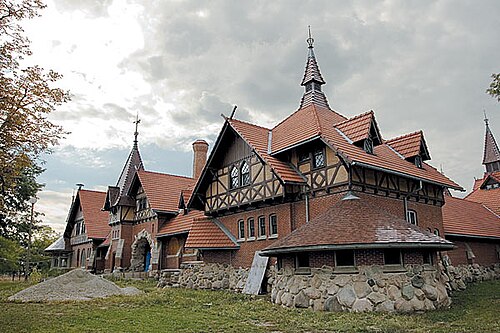
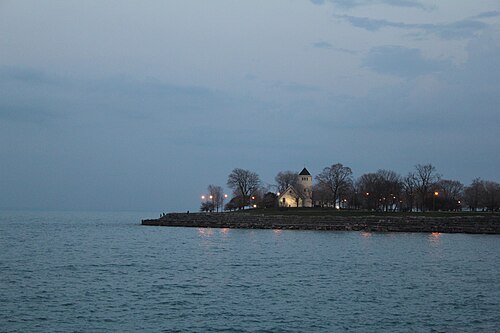
Montrose Beach
Montrose Beach is a public beach on the North Side of Chicago. It sits along Lake Michigan with adjacent natural areas that serve as bird habitat.
Oak Street Beach is a public beach on the Lake Michigan shoreline in Chicago's Near North Side. It sits directly below the Gold Coast neighborhood, one of the city's most affluent residential districts.
Margaret Burroughs Beach
31st Street Beach is a public beach on Lake Michigan in Chicago, Illinois. It sits on the city's South Side within the Burnham Park lakefront system.
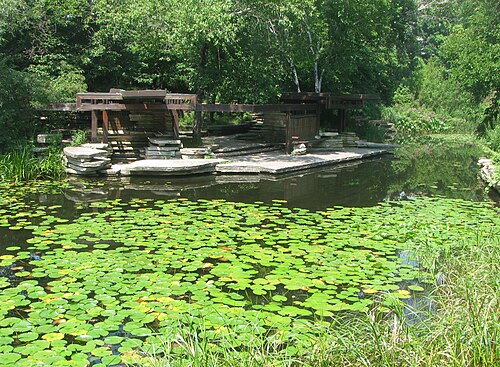
The Alfred Caldwell Lily Pool is a restored Prairie-style pond and landscape located in Chicago's Lincoln Park. Designed by landscape architect Alfred Caldwell in the 1930s, this hidden gem exemplifies the organic architectural philosophy of the Prairie School movement.
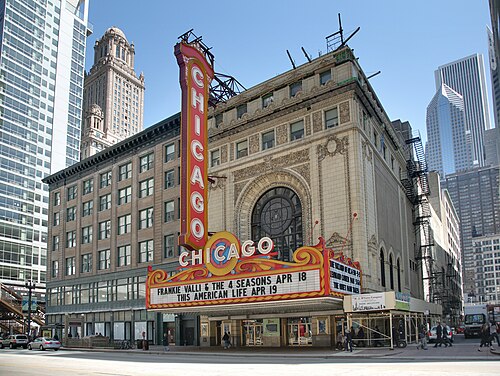
The Chicago Theatre is an iconic movie palace and live-performance landmark in Chicago's Loop district. Opened in 1921, it was originally a flagship venue for the Balaban and Katz theatre chain.
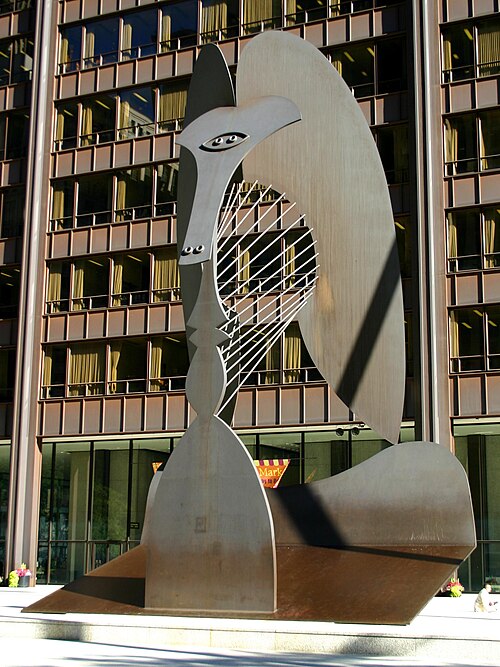
The Chicago Picasso is an untitled monumental sculpture by Pablo Picasso, installed in 1967 in Daley Plaza.
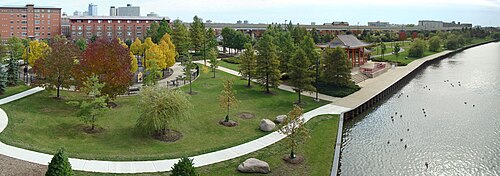
Ping Tom Memorial Park is a riverfront public park in Chicago's Chinatown. It brings open space, walking paths, lawns, trees, seating, and water views into a dense urban neighborhood.
Humboldt (Alexander Von) Park
Humboldt Park is a 207-acre historic public park on Chicago's West Side and the centerpiece of the surrounding neighborhood. The park combines designed landscape, recreation, and Puerto Rican cultural importance.
Promontory Point is a man-made peninsula extending into Lake Michigan within Burnham Park on Chicago's South Side. Designed by Alfred Caldwell and completed in 1937, it was constructed with limestone blocks as part of the Works Progress Administration.
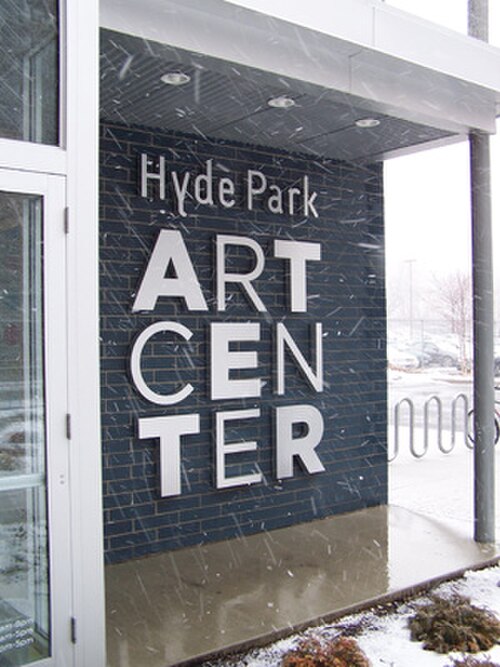
Hyde Park Art Center is an independent nonprofit contemporary-art space and community arts hub in Chicago's Hyde Park neighborhood. Founded in 1939, the center is one of the city's oldest alternative exhibition spaces.
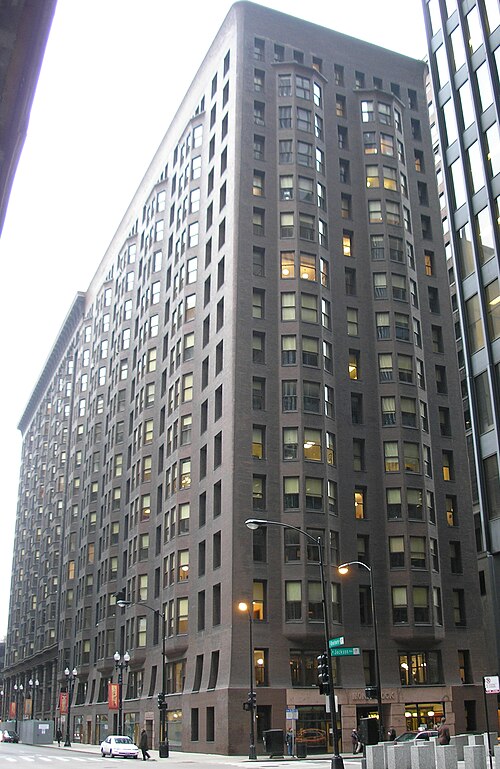
The Monadnock Building stands as a landmark commercial structure in Chicago's Loop district, recognized as an essential exemplar of the Chicago School architectural movement.
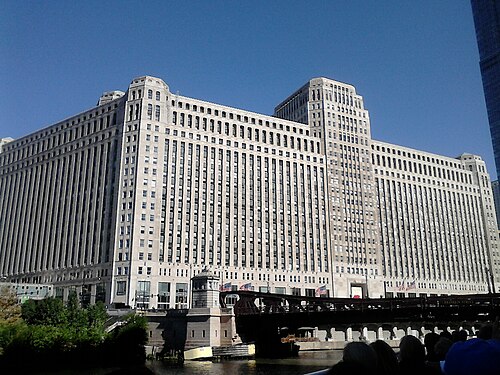
The Merchandise Mart is a massive Art Deco commercial landmark situated on the Chicago River. Completed in 1930, it was once the largest building in the world by floor area.
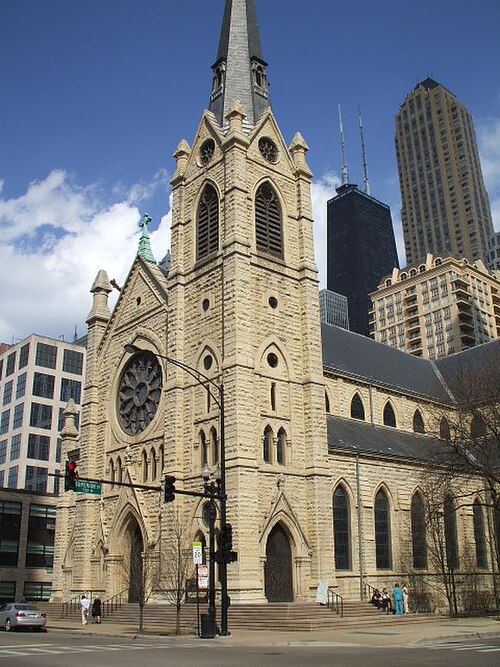
Holy Name Cathedral is Chicago’s principal Roman Catholic cathedral and the seat of the Archdiocese of Chicago. It is an active place of worship as well as a significant Gothic Revival landmark in the city’s Near North Side.
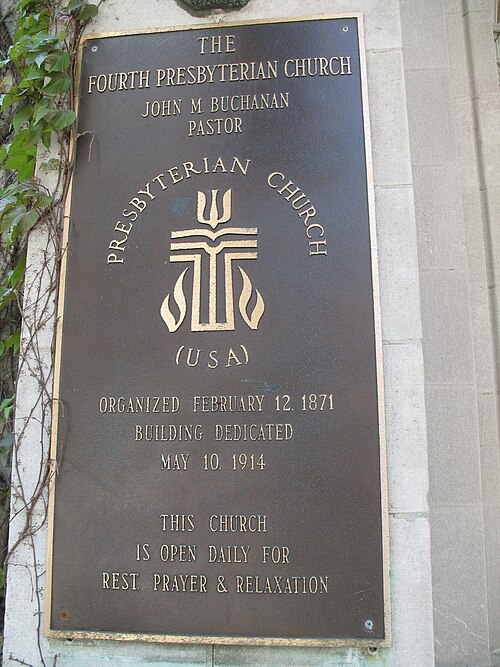
Fourth Presbyterian Church
Fourth Presbyterian Church stands on North Michigan Avenue beside the Magnificent Mile, where Gothic Revival architecture meets one of Chicago’s busiest commercial corridors.
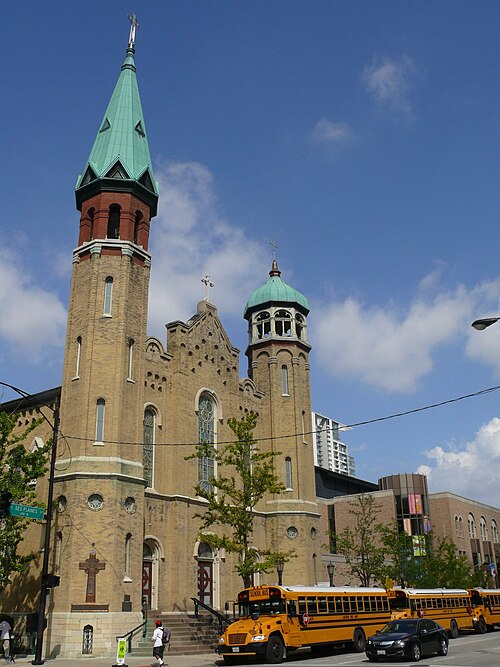
Old Saint Patrick's Church
Old St. Patrick's Church is a Roman Catholic parish in Chicago and one of the city's oldest surviving churches.
Second Presbyterian Church is a historic landmark church in Chicago, Illinois. It was built following the destruction of the congregation's previous building in the Great Chicago Fire of 1871.
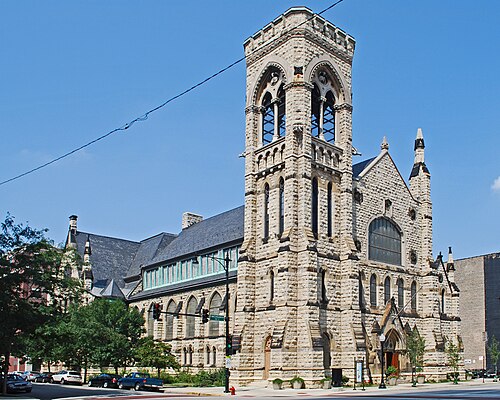
Pilgrim Baptist Church is a historic church building in Chicago’s Bronzeville neighbourhood, on the city’s South Side. The building joins two important stories: the architecture of Louis Sullivan and Dankmar Adler, and the development of African American gospel music.
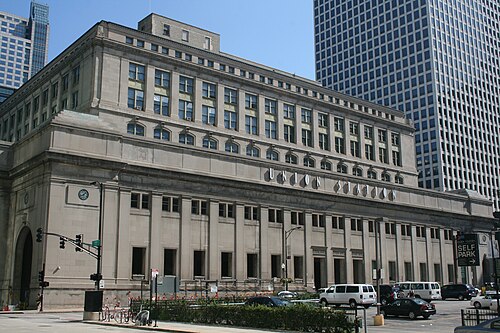
Chicago Union Station is a major intercity rail terminal in Chicago, Illinois. It serves as the primary hub for Amtrak long-distance and Midwest corridor trains, as well as Metra commuter rail services.
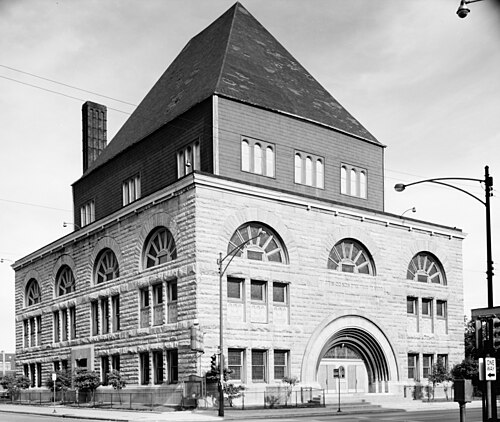
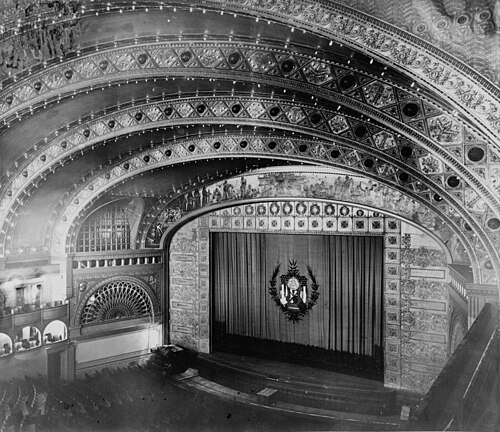
The Auditorium Theatre is a historic performance venue located within the Auditorium Building in Chicago, Illinois. It was designed by the renowned architectural firm Adler and Sullivan, with Louis Sullivan as the lead architect and Dankmar Adler handling the engineering.
Jackson Park is a large public park on Chicago's South Side lakefront. Its landscape is closely associated with the 1893 World's Columbian Exposition, whose planning and legacy shaped this part of the city.
Northerly Island is a 91-acre peninsula and former airport site on Chicago's lakefront, converted into a public park and natural area. It extends into Lake Michigan south of the Museum Campus.
Oz Park is a neighbourhood park in Chicago’s Lincoln Park area, known for its public art inspired by L. Frank Baum’s The Wonderful Wizard of Oz.
Graceland Cemetery is a historic landscape cemetery in Chicago. Established in 1860, it represents a significant example of the rural cemetery movement in American landscape design.
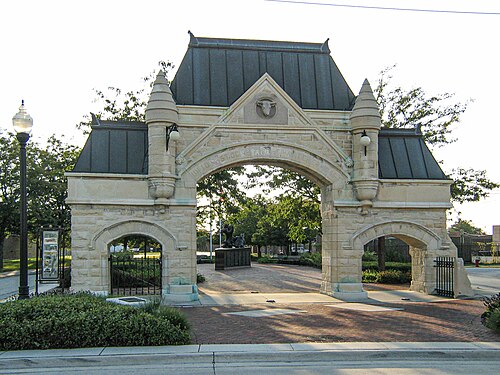
Union Stock Yards Gate
The Union Stock Yard Gate stands as the surviving monumental entrance to Chicago's historic stockyards, once the center of the American meatpacking industry.
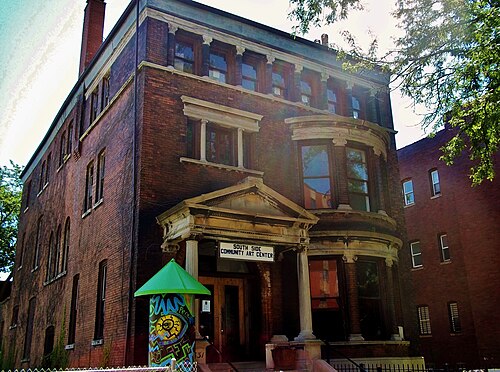
South Side Community Art Center (SSCAC)
The South Side Community Art Center is a historic Black arts institution located in Chicago's Bronzeville neighborhood. Founded in 1940, it is one of the only surviving centers established by the Works Progress Administration's Federal Art Project.
State Street and Madison Street form the reference point for Chicago's address grid. The Loop sits beside the river and lake, with the Magnificent Mile and River North immediately north. Museum Campus, Hyde Park and Bronzeville lie south; West Loop, Pilsen and Wicker Park extend west and northwest. The lakefront is a continuous orientation line, but neighbourhood distances are substantial, so a map that appears compact can still represent several miles of travel.
Checked 2026-08-26
Walk within the Loop and along the central riverfront, then use CTA trains and buses for neighbourhoods and the airports. The colour-coded rail network connects downtown with the North, West and South Sides; the Blue Line serves O'Hare and the Orange Line serves Midway. Metra is useful for farther suburban trips rather than most central sightseeing. Check the official service map and alerts before travel because planned work can alter routes.
Checked 2026-08-26
Suggested stay for a first visit: 3–4 days. Plan one block for the Loop and river, one for the lakefront museums, and additional time for the neighbourhoods that match your interests.
The Loop is the practical centre, bounded by elevated rail tracks and set beside the river and Lake Michigan. River North and the Magnificent Mile begin immediately north.
Yes. Walk downtown and use CTA trains and buses for the lakefront, neighbourhoods and airports. Metra is mainly useful for destinations farther beyond the central city.
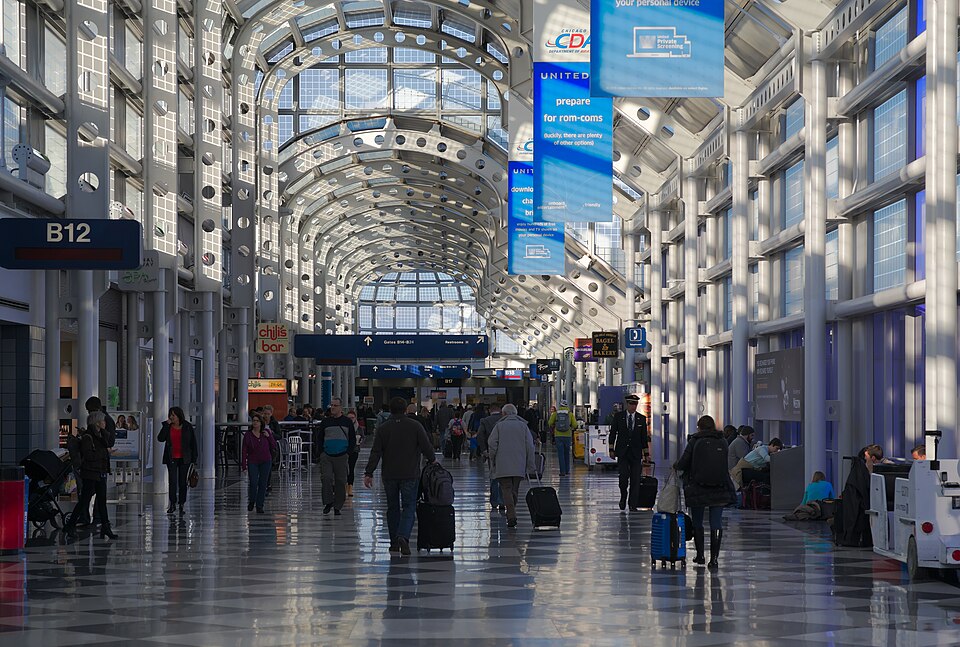
The CTA Blue Line connects O'Hare International Airport with downtown. Consult CTA service alerts before departure because construction or maintenance can affect the normal route.
Not always. The grid makes orientation simple, but the city extends a long way along the lake. Group nearby districts and use transit between the North, West and South Sides.