Belvedere
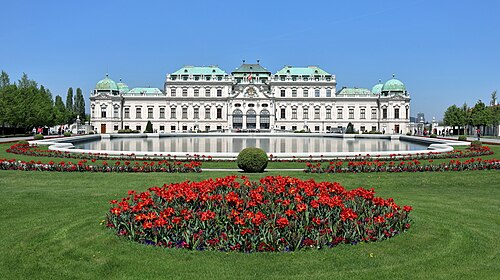
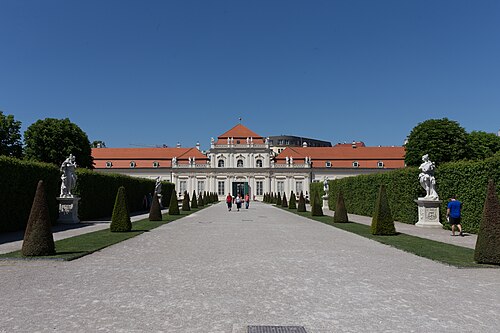
Belvedere is Prince Eugene of Savoy’s former summer residence, not one palace but a carefully staged Baroque ensemble in Vienna’s Landstraße district.
- Must see
- Historic monument
- Landstraße
Language · 11 published
City guide · Austria
Vienna is 414.78 km² holding 2,028,499 people, and almost everything a visitor comes for sits inside a single ring road less than a kilometre across. The Innere Stadt — the 1st district — is the medieval core, and the Ringstrasse that surrounds it was built in the second half of the nineteenth century on the line of the demolished bastions. The 371-hectare historic centre has been a UNESCO World Heritage Site since 2001; it was on the endangered list from 2017 to 2026. The wider urban area holds 2,223,236 people and the metropolitan area 2,890,577, which makes Vienna the tenth largest city in Europe and by a long way the largest in Austria.
Reviewed by Elena Voss · Roavina Travel Editor
Set your days, your pace and the hours you actually want to be out. The planner works around closing days and travel time, and leaves room to eat.
Ranked by importance — sitelinks, pageviews and heritage status, not editor preference.
27 places match
Category
Typical visit duration
Interests
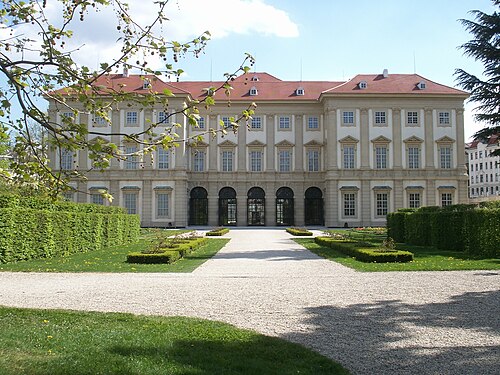
Belvedere is Prince Eugene of Savoy’s former summer residence, not one palace but a carefully staged Baroque ensemble in Vienna’s Landstraße district.
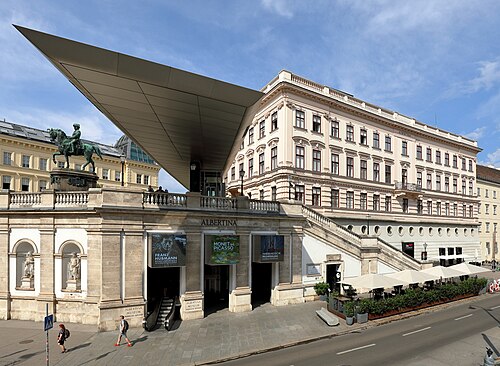
Albertina is a museum in a former Habsburg palace above Albertinaplatz, immediately behind Vienna’s State Opera.
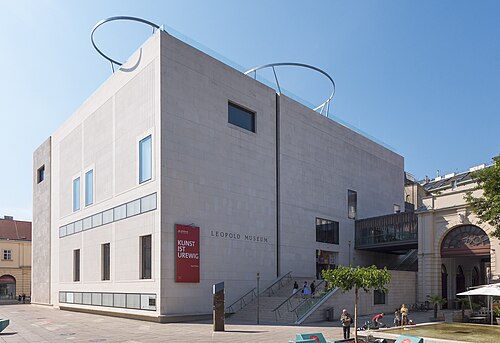
The Leopold Museum houses the collection assembled over five decades by the ophthalmologist and collector Rudolf Leopold, sold to the Austrian state in 1994 and opened to the public in this purpose-built home inside the MuseumsQuartier in 2001.
Spanische Hofreitschule
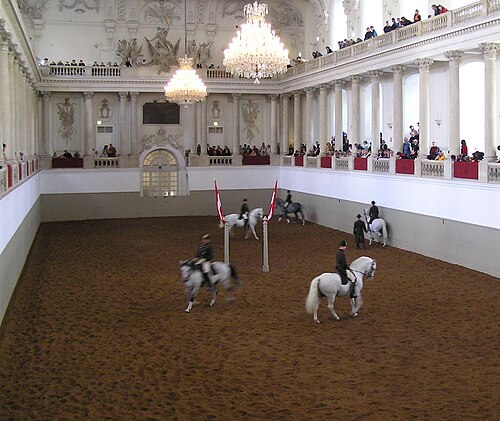
The Spanish Riding School is the world's oldest institution still practising classical Baroque horsemanship in its original form, tracing its riding tradition back to 1572 and its Lipizzaner breeding programme to the Habsburgs' interest in Spanish-bred horses.
Kaiserliche Schatzkammer
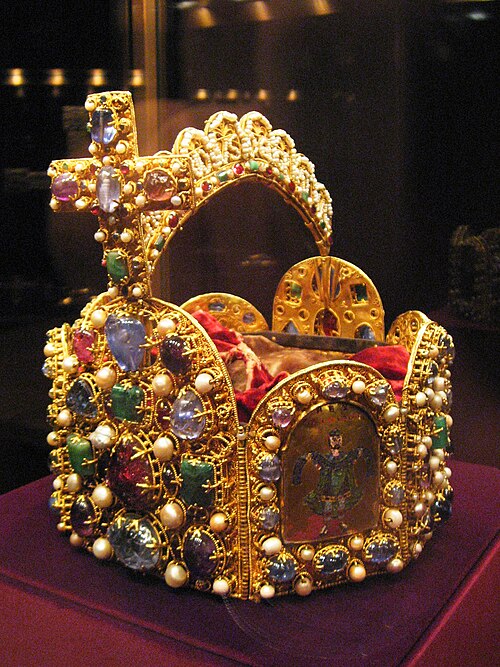
The Imperial Treasury, the Kaiserliche Schatzkammer, holds the Habsburg dynasty's crown jewels and imperial regalia inside the Hofburg's Schweizerhof, the Swiss Courtyard at the historic core of the palace complex.
Museum für Angewandte Kunst
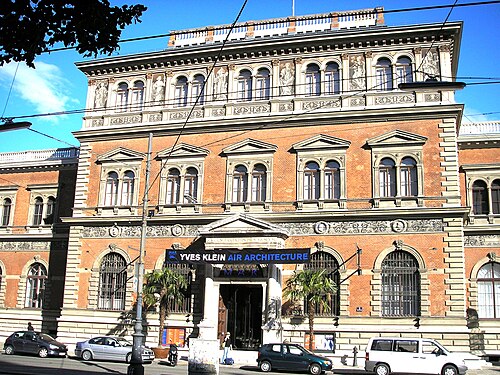
The MAK was the first museum of its kind on the continent, and it was founded to improve manufacturing.
Museum Moderner Kunst Stiftung Ludwig Wien
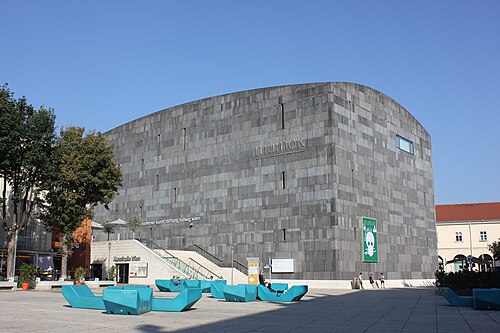
mumok — the Museum Moderner Kunst Stiftung Ludwig — is Austria's largest museum of modern and contemporary art, and the darkest building on the MuseumsQuartier plaza by design.
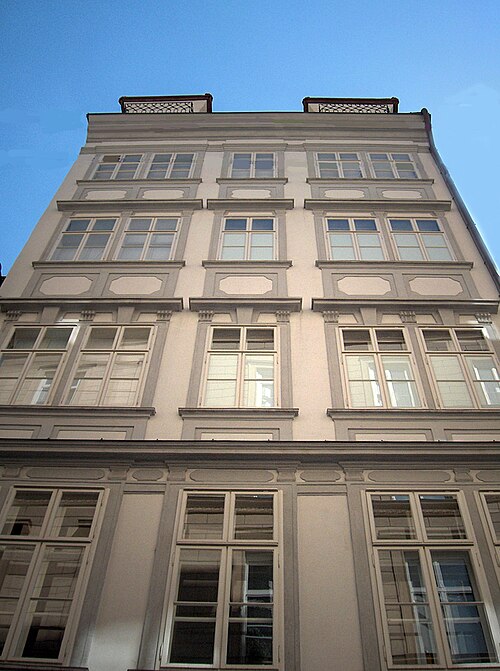
Mozarthaus Vienna, at Domgasse 5 in the Innere Stadt, is the only one of Wolfgang Amadeus Mozart's Viennese residences still standing.
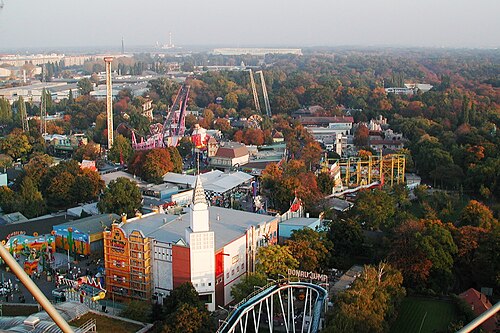
Wurstelprater is Vienna’s permanent amusement quarter in Leopoldstadt, within the larger Prater complex. It combines rides, games, food, and evening entertainment in an open recreational setting rather than a single enclosed theme park.
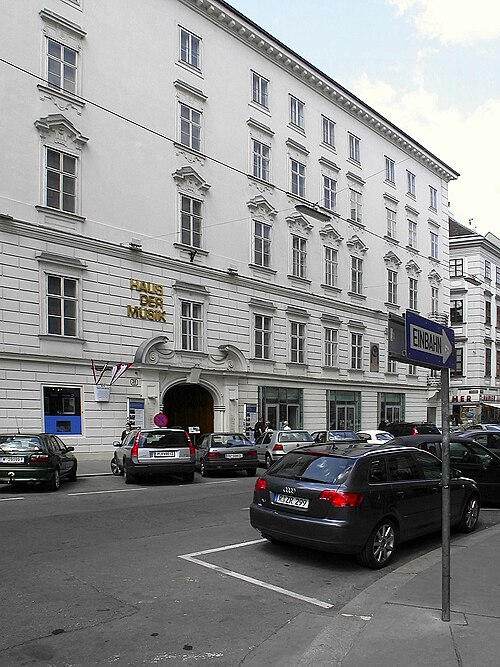
The Haus der Musik is a ticketed, interactive sound museum in the Palais Erzherzog Karl on Seilerstatte, a five-minute walk from the Vienna State Opera.
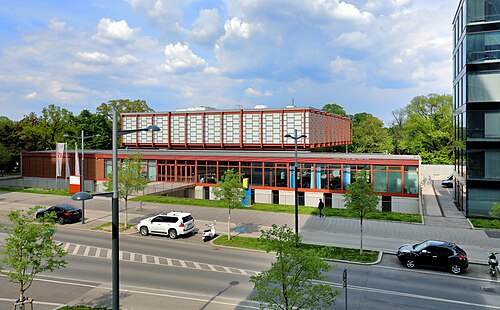
Belvedere 21 is Vienna's museum for contemporary art, housed in a steel-and-glass pavilion in the Schweizergarten, a few hundred metres south of the Baroque Belvedere palace complex it is administratively part of.
Kursalon Hübner
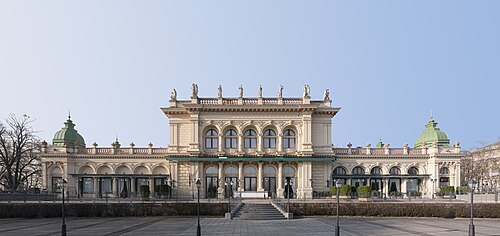
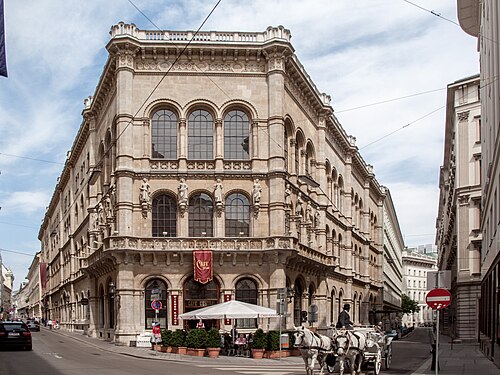
Kursalon Vienna is an Italian Renaissance Revival building standing at the edge of the Stadtpark in Vienna's Innere Stadt district, built in 1865-67 by architect Johann Garben as a public 'cure hall', a cafe and gathering pavilion meant to draw…
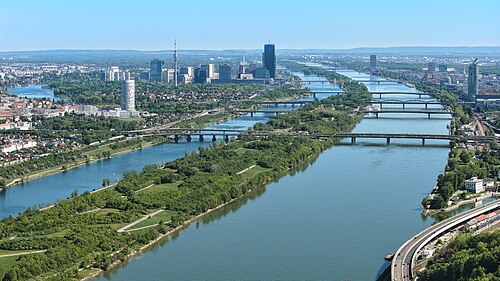
Donauinsel, the Danube Island, is a 21.1-kilometre artificial island built between the 1970s and early 1980s as a flood-relief channel, running as a narrow strip between the Danube itself and a new parallel channel, the Neue Donau, dug specifically to…
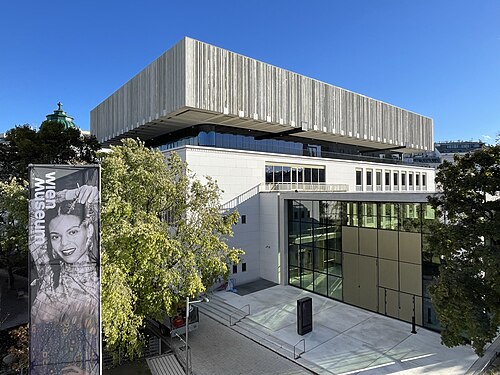
Wien Museum Karlsplatz
Wien Museum, on Karlsplatz, is Vienna's museum of its own history, tracing the city from the Roman camp of Vindobona through the medieval, Baroque and Ringstrasse periods to the twentieth century.
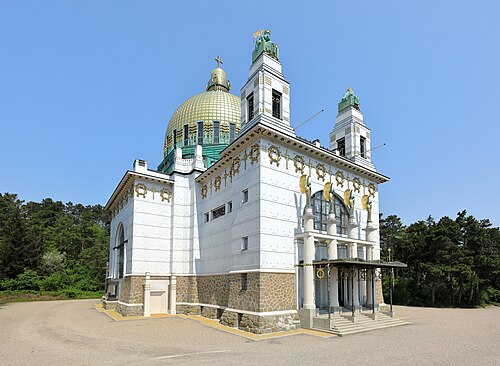
Otto-Wagner-Kirche
Kirche am Steinhof is Otto Wagner's Art Nouveau church, built in 1904-1907 as the chapel of the Niederösterreichische Landes-Heil- und Pflegeanstalt für Nerven- und Geisteskranke — the psychiatric hospital on the Steinhof hill, now the Klinik Penzing site — and…
Palais Liechtenstein (Gartenpalais)
The Garden Palace (Gartenpalais Liechtenstein) is the Liechtenstein princely family's Baroque summer residence in Alsergrund, the 9th district, built 1691-1711 for Prince Johann Adam Andreas I of Liechtenstein.
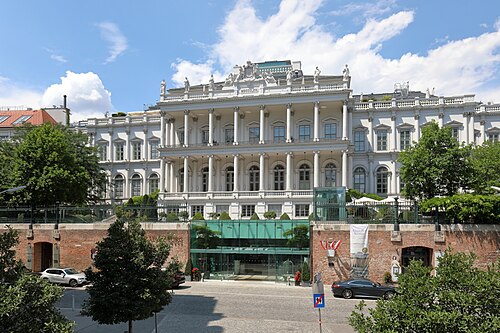
Palais Coburg is a Neoclassical palace at Coburgbastei 4 in Vienna's first district, built between 1840 and 1845 for Ferdinand Georg August, Prince of Saxe-Coburg-Saalfeld-Koháry, on top of a surviving bastion of the old city fortifications.
Schloss Neugebäude
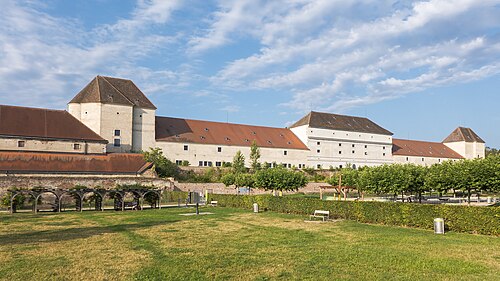
Neugebäude is a ruined Renaissance palace at Simmering, on Vienna's south-eastern edge, built 1568-1573 for Emperor Maximilian II.
Globenmuseum
The Globe Museum, or Globenmuseum, is a specialist museum in Vienna devoted to globes and related cartographic instruments. Its collection brings geography, astronomy, craftsmanship, and the history of knowledge together in three-dimensional form.
Palais Ferstel is a mid-nineteenth-century palace between Freyung and Herrengasse in Vienna's Innere Stadt, built between 1856 and 1860 to a design by architect Heinrich von Ferstel, after whom it is named.
Beethoven Museum
Unteres Belvedere
MUSA
MUSA is Wien Museum’s exhibition venue for contemporary art from Vienna, located beside City Hall in the Innere Stadt. Its changing presentations trace artistic developments in the city over recent decades and introduce less familiar positions alongside established work.
Source: OpenStreetMap contributors, Wikidata ·
District boundaries come from OSM administrative relations, so a district page holds exactly the places inside it — plus, for the islands and the coast, the nearest district by proximity.
Twenty-three districts, numbered roughly in the order they were absorbed, arranged around the 1st.
The Innere Stadt is the 1st and holds the cathedral, the Hofburg, the opera and most of what a short visit will see. Districts 2 to 9 and 20 were incorporated in 1850 and lie inside the Gürtel, the outer ring road; they are the inner districts and are where most visitors sleep and eat. Districts 10 to 19 and 21 to 23 came in between 1874 and 1938, mostly in 1892.
Districts 21 and 22 are across the Danube on the left bank — Floridsdorf is the northernmost part of the city and Donaustadt the largest by area. Districts 2 and 20 sit on the island between the Danube and the Donaukanal.
The postal code gives the district: 1XXA, where the middle two digits are the district number. An address at 1070 is in the 7th.
Checked 2026-08-23
The U-Bahn, the trams, and a ticket that covers both.
The U-Bahn has five lines, 109 stations and 83.9 km of track, and it opened on 25 February 1978. It carried 404.8 million passengers in 2023. Trains run from about 05:00 to 01:00 at intervals of two to fifteen minutes, and run all night at fifteen-minute intervals on Friday and Saturday nights and before public holidays.
A sixth line, the U5, is under construction for completion between 2026 and 2032; the network will then be 90 km with 116 stations.
Tickets are integrated with the trams, the buses and the S-Bahn through the VOR system, so one ticket covers the whole journey. Some airport services are outside it.
Inside the Ring, walking beats all of it.
Checked 2026-08-23
Three to four. Two days cover the Innere Stadt and the Ring — the cathedral, the Hofburg, the opera, the museums on the Maria-Theresien-Platz. A third takes Schönbrunn and the Belvedere, and a fourth allows a proper concert or an afternoon in the wine villages.
Twenty-three of them, numbered roughly in the order they joined the city. The 1st is the medieval centre, districts 2–9 and 20 came in 1850 and lie inside the Gürtel, and the rest arrived between 1874 and 1938. The postal code carries the number: 1070 is the 7th district.
The boulevard built in the second half of the nineteenth century on the line of the demolished city bastions, encircling the Innere Stadt. Most of Vienna's great public buildings face onto it.
For anything beyond the Ring, yes. Five lines, 109 stations, 83.9 km, running from about 05:00 to 01:00 and all night at weekends. Inside the Ring, walking is faster.
April to June and September to October. Summer afternoons reach 27–32°C and the palace gardens have little shade; winter hovers around freezing but brings the concert season and the Christmas markets.
414.78 km² with 2,028,499 people in the city proper, 2,223,236 in the urban area and 2,890,577 in the metropolitan area — the tenth largest city in Europe.