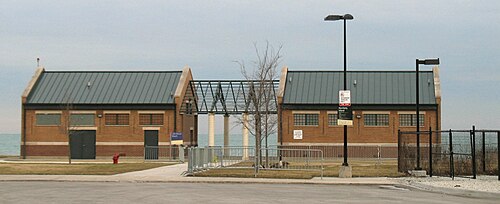
Northerly Island
Northerly Island is a 91-acre peninsula and former airport site on Chicago's lakefront, converted into a public park and natural area. It extends into Lake Michigan south of the Museum Campus.
- High
- Nature site
City guide · United States
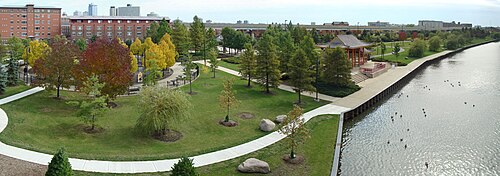
Chicago is organised around Lake Michigan, the Chicago River and a regular street grid. The Loop contains the central business district, major architecture and...
Photograph · J. Crocker · Attribution
Set your days, your pace and the hours you actually want to be out. The planner works around closing days and travel time, and leaves room to eat.
Reviewed by Elena Voss · Roavina Travel Editor
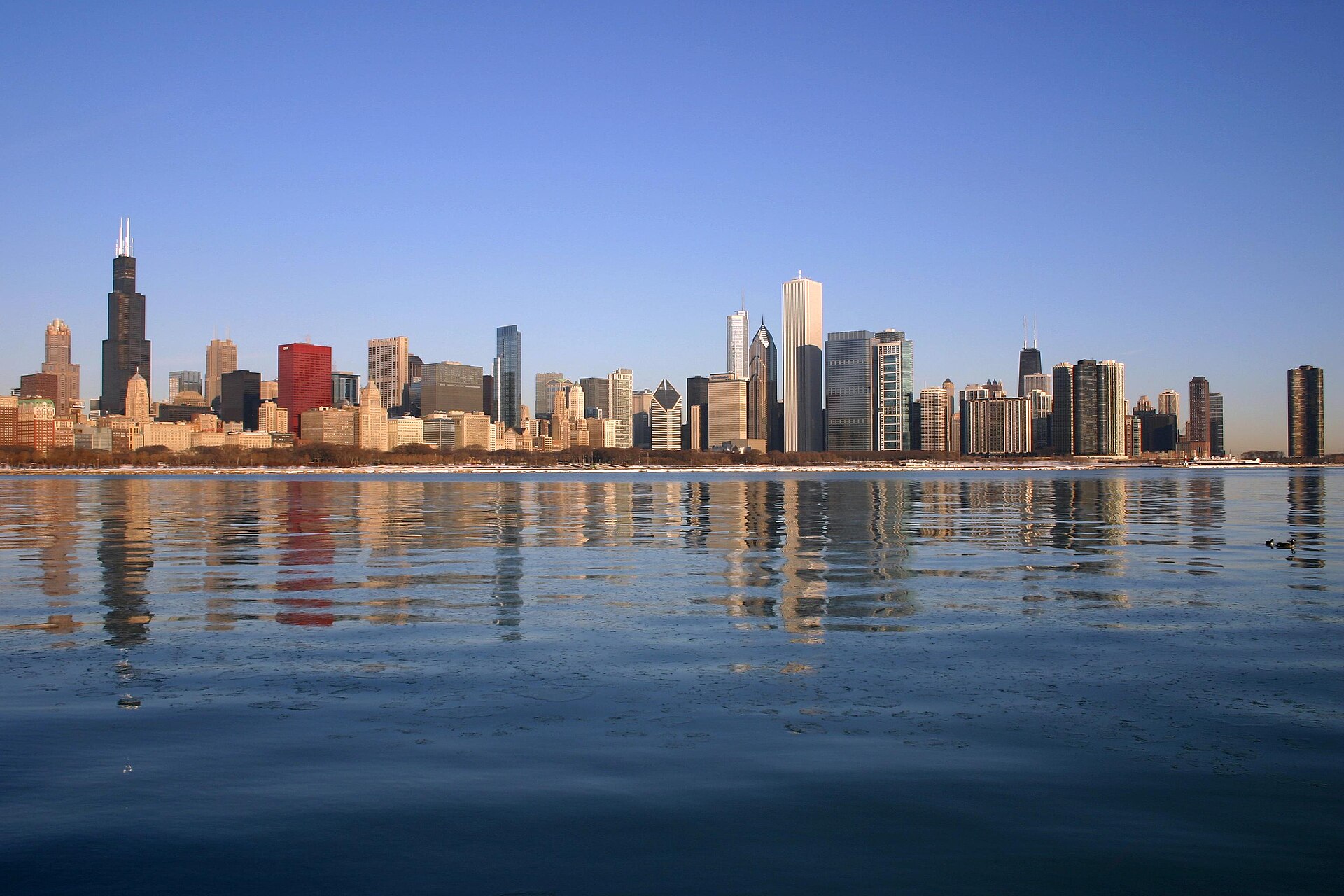
Chicago is organised around Lake Michigan, the Chicago River and a regular street grid. The Loop contains the central business district, major architecture and Millennium Park; museum campuses and lakefront parks extend south, while River North, Lincoln Park and neighbourhood centres continue north and west. A first visit works best when downtown sights are grouped together and separate time is reserved for one or two neighbourhoods beyond the Loop.
Checked 2026-08-26
September · September cools Chicago to a 75.5°F mean high while normal precipitation drops to 3.19 inches.
Ranked by importance — sitelinks, pageviews and heritage status, not editor preference.
98 places match
Category
Typical visit duration
Interests
Northerly Island is a 91-acre peninsula and former airport site on Chicago's lakefront, converted into a public park and natural area. It extends into Lake Michigan south of the Museum Campus.
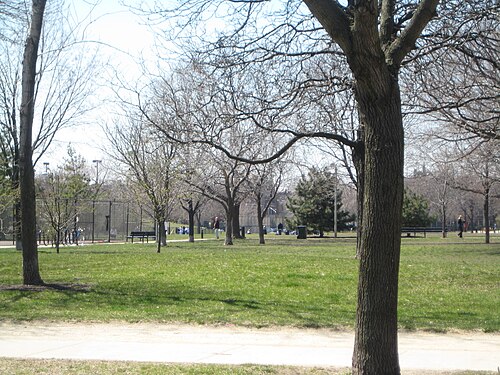
Ping Tom Memorial Park is a riverfront public park in Chicago's Chinatown. It brings open space, walking paths, lawns, trees, seating, and water views into a dense urban neighborhood.
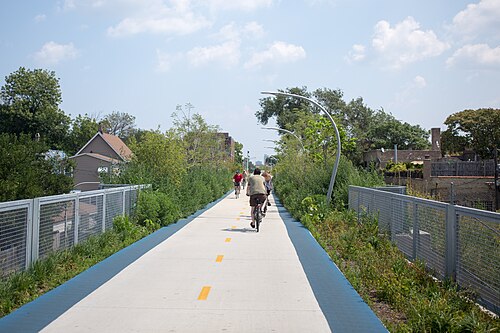
The 606 is an elevated linear park and trail system on Chicago's Northwest Side. Built on a former railway embankment, it runs through several neighborhoods.
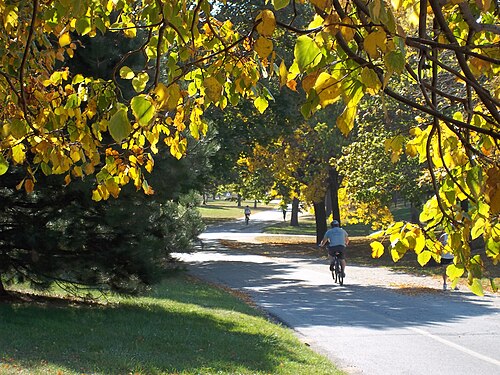
The Chicago Lakefront Trail is an extensive multi-use path running along the western shore of Lake Michigan. It stretches through Chicago's lakefront park system, connecting numerous neighborhoods and recreational areas.
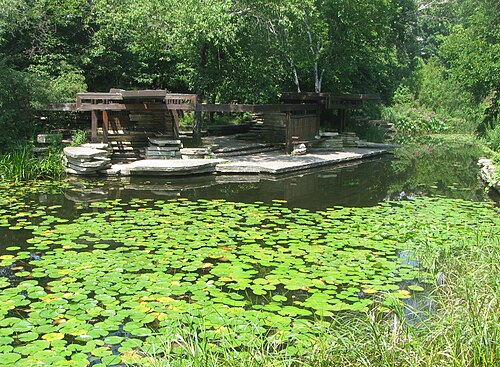
The Alfred Caldwell Lily Pool is a restored Prairie-style pond and landscape located in Chicago's Lincoln Park. Designed by landscape architect Alfred Caldwell in the 1930s, this hidden gem exemplifies the organic architectural philosophy of the Prairie School movement.
Oz Park is a neighbourhood park in Chicago’s Lincoln Park area, known for its public art inspired by L. Frank Baum’s The Wonderful Wizard of Oz.
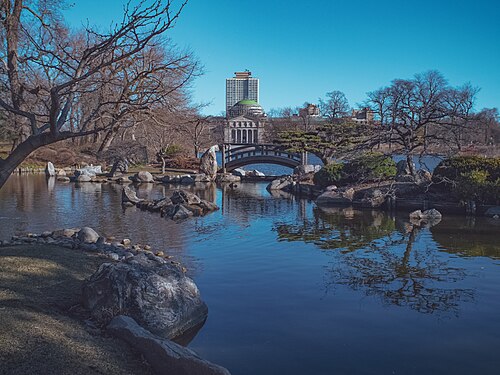
The Garden of the Phoenix is a Japanese garden on Wooded Island in Chicago’s Jackson Park. It occupies the site of the Japanese Pavilion associated with the 1893 World’s Columbian Exposition and stands near the Museum of Science and Industry.
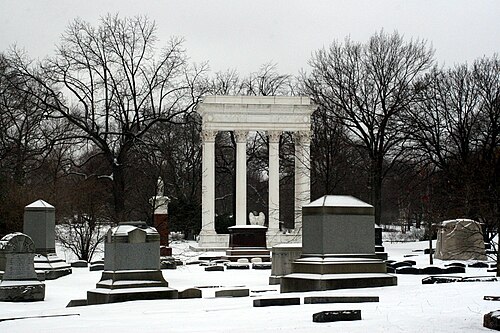
Graceland Cemetery is a historic landscape cemetery in Chicago. Established in 1860, it represents a significant example of the rural cemetery movement in American landscape design.
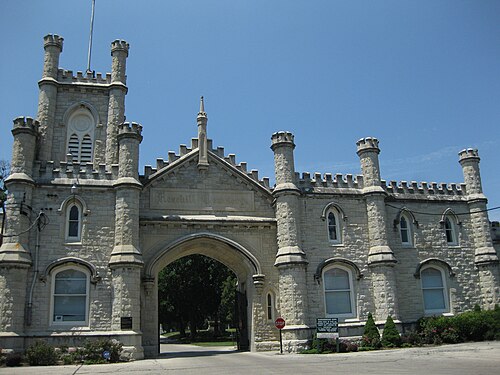
Rosehill Cemetery is a historic burial ground located on the North Side of Chicago, Illinois. Established in 1859, it is the largest cemetery in the city of Chicago.
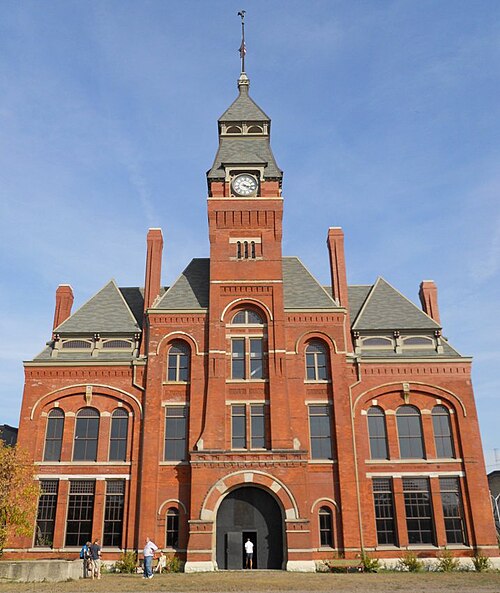
Pullman National Historical Park preserves the historic Pullman district on Chicago's South Side. Established as a planned industrial community in 1880 by George Pullman for his railroad car manufacturing company, it represents a significant chapter in American industrial history.
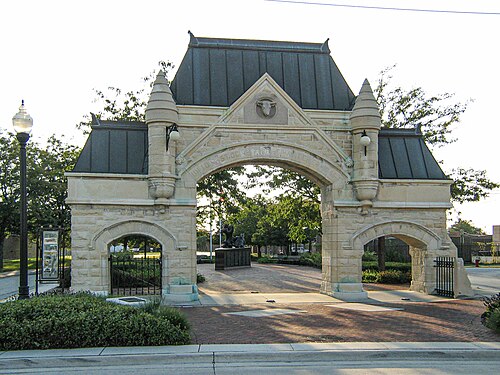
Union Stock Yards Gate
The Union Stock Yard Gate stands as the surviving monumental entrance to Chicago's historic stockyards, once the center of the American meatpacking industry.
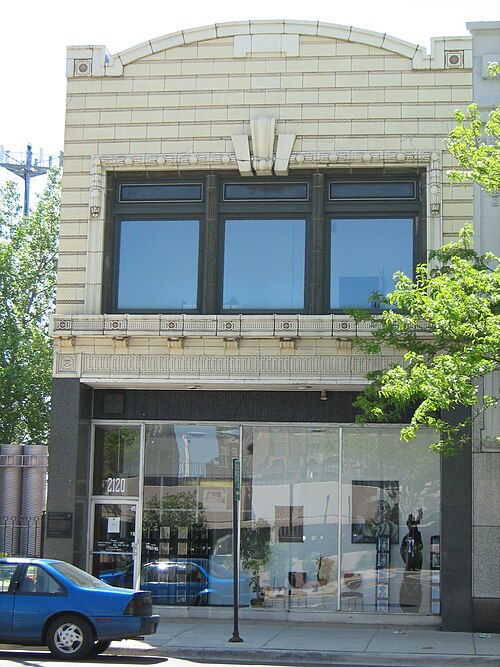
Chess Studio
Chess Records was a landmark American record company and recording studio on Chicago's South Side. Founded by brothers Leonard and Phil Chess, it became one of the most important labels in blues and early rock and roll history.
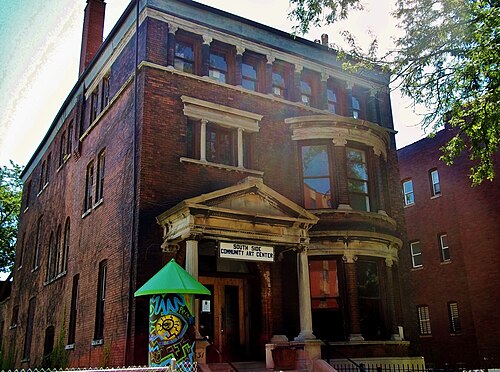
South Side Community Art Center (SSCAC)
The South Side Community Art Center is a historic Black arts institution located in Chicago's Bronzeville neighborhood. Founded in 1940, it is one of the only surviving centers established by the Works Progress Administration's Federal Art Project.
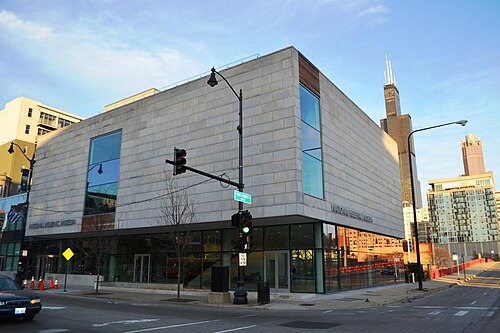
The National Hellenic Museum is a cultural institution located in Chicago's Greektown neighborhood. It is dedicated to preserving and interpreting the history, culture, and contributions of Greek people, with particular emphasis on the Greek diaspora experience in America.
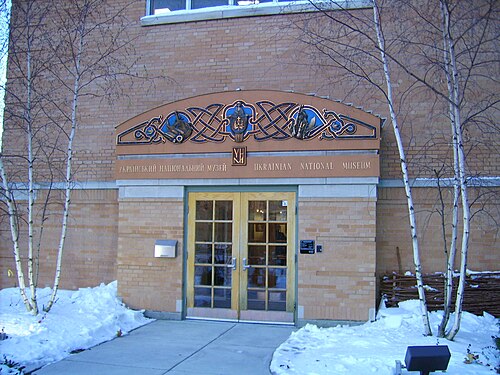
The Ukrainian National Museum is a cultural institution located in Chicago's Ukrainian Village neighborhood. It preserves and presents Ukrainian-American history and material culture for public education.
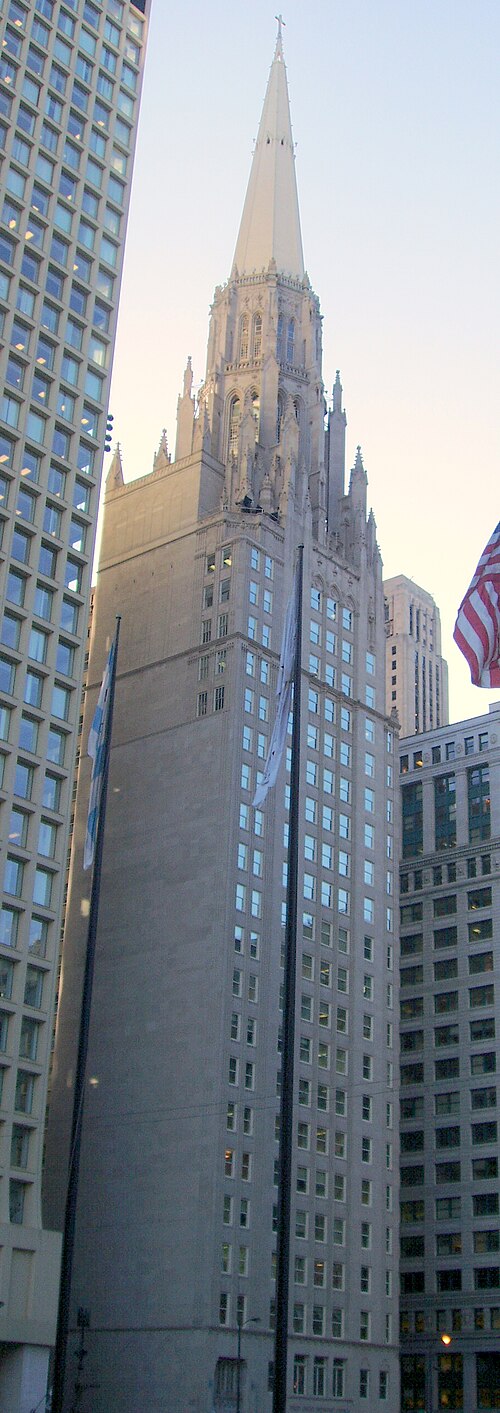
The First United Methodist Church of Chicago occupies the historic Chicago Temple Building, a distinctive skyscraper in downtown Chicago. Founded in 1831, it is the oldest church in the city.
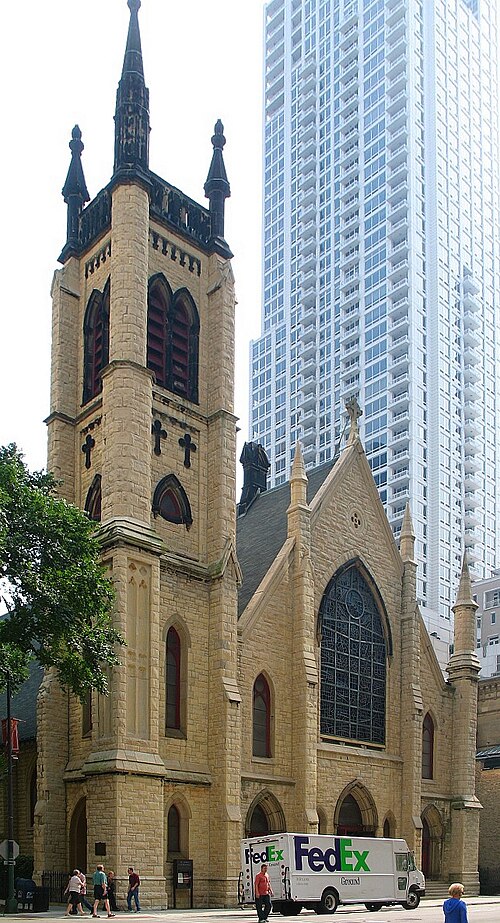
St. James Episcopal Cathedral
St. James Cathedral is an historic Episcopal cathedral on Huron Street in Chicago. It is the cathedral church of the Episcopal Diocese of Chicago, serving as both an active parish church and the seat of the diocesan bishop.
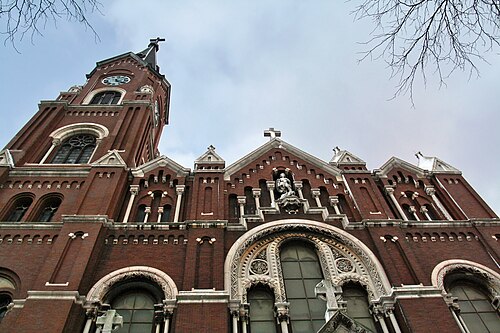
Saint Michael Roman Catholic Church
St. Michael's Church is a Roman Catholic parish church in Chicago's Old Town. Its strongest historical distinction is survival through the Great Chicago Fire of 1871, which destroyed much of the city.
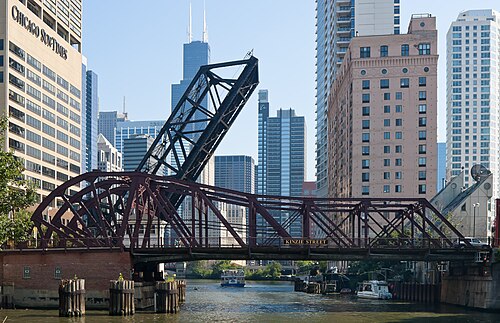
Kinzie Street Bridge is a Chicago River crossing in the downtown area, carrying road traffic and pedestrians across the North Branch.
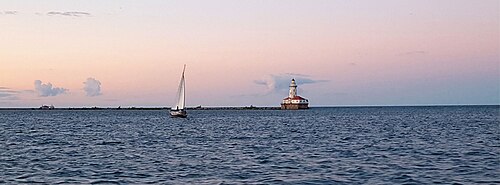
Chicago Harbor Lighthouse is a historic harbour light on a detached breakwater east of Navy Pier. Dating to 1893 and associated with the World's Columbian Exposition, it remains an active aid to navigation on Lake Michigan.
Chicago Magic Lounge is an Andersonville performance venue devoted to close-up magic. Instead of presenting conjuring from a distant stage, its format brings sleight-of-hand and interactive illusions close to the audience.
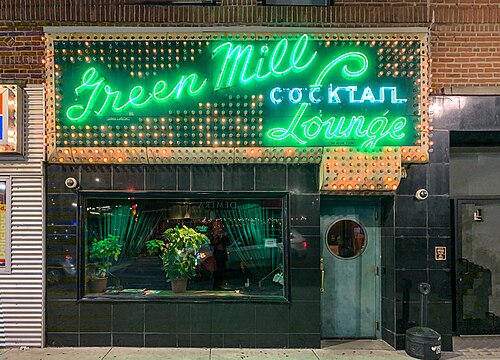
Green Mill Cocktail Lounge is a historic jazz club in Chicago’s Uptown neighborhood. Its story reaches back to the early twentieth century, and the venue is closely connected with Chicago’s Prohibition-era nightlife.
The Old Town School of Folk Music is an influential folk-music school in Chicago. Founded in 1957, it has become one of the most significant institutions dedicated to folk music education in the United States.
State Street and Madison Street form the reference point for Chicago's address grid. The Loop sits beside the river and lake, with the Magnificent Mile and River North immediately north. Museum Campus, Hyde Park and Bronzeville lie south; West Loop, Pilsen and Wicker Park extend west and northwest. The lakefront is a continuous orientation line, but neighbourhood distances are substantial, so a map that appears compact can still represent several miles of travel.
Checked 2026-08-26
Walk within the Loop and along the central riverfront, then use CTA trains and buses for neighbourhoods and the airports. The colour-coded rail network connects downtown with the North, West and South Sides; the Blue Line serves O'Hare and the Orange Line serves Midway. Metra is useful for farther suburban trips rather than most central sightseeing. Check the official service map and alerts before travel because planned work can alter routes.
Checked 2026-08-26
A fixed stay length is not recorded. Plan one block for the Loop and river, one for the lakefront museums, and additional time for the neighbourhoods that match your interests.
The Loop is the practical centre, bounded by elevated rail tracks and set beside the river and Lake Michigan. River North and the Magnificent Mile begin immediately north.
Yes. Walk downtown and use CTA trains and buses for the lakefront, neighbourhoods and airports. Metra is mainly useful for destinations farther beyond the central city.
The CTA Blue Line connects O'Hare International Airport with downtown. Consult CTA service alerts before departure because construction or maintenance can affect the normal route.
Not always. The grid makes orientation simple, but the city extends a long way along the lake. Group nearby districts and use transit between the North, West and South Sides.