
57
10 min
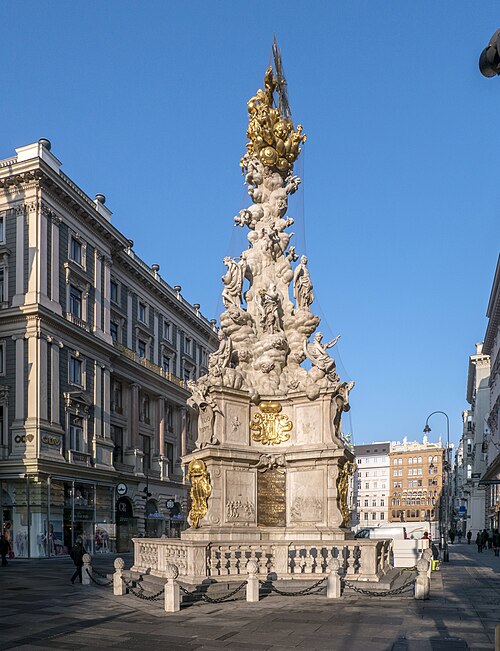
Pestsäule
The Pestsäule is a promise made by an emperor who had left town.
- High
- Historic monument
- Innere Stadt
City guide · Austria
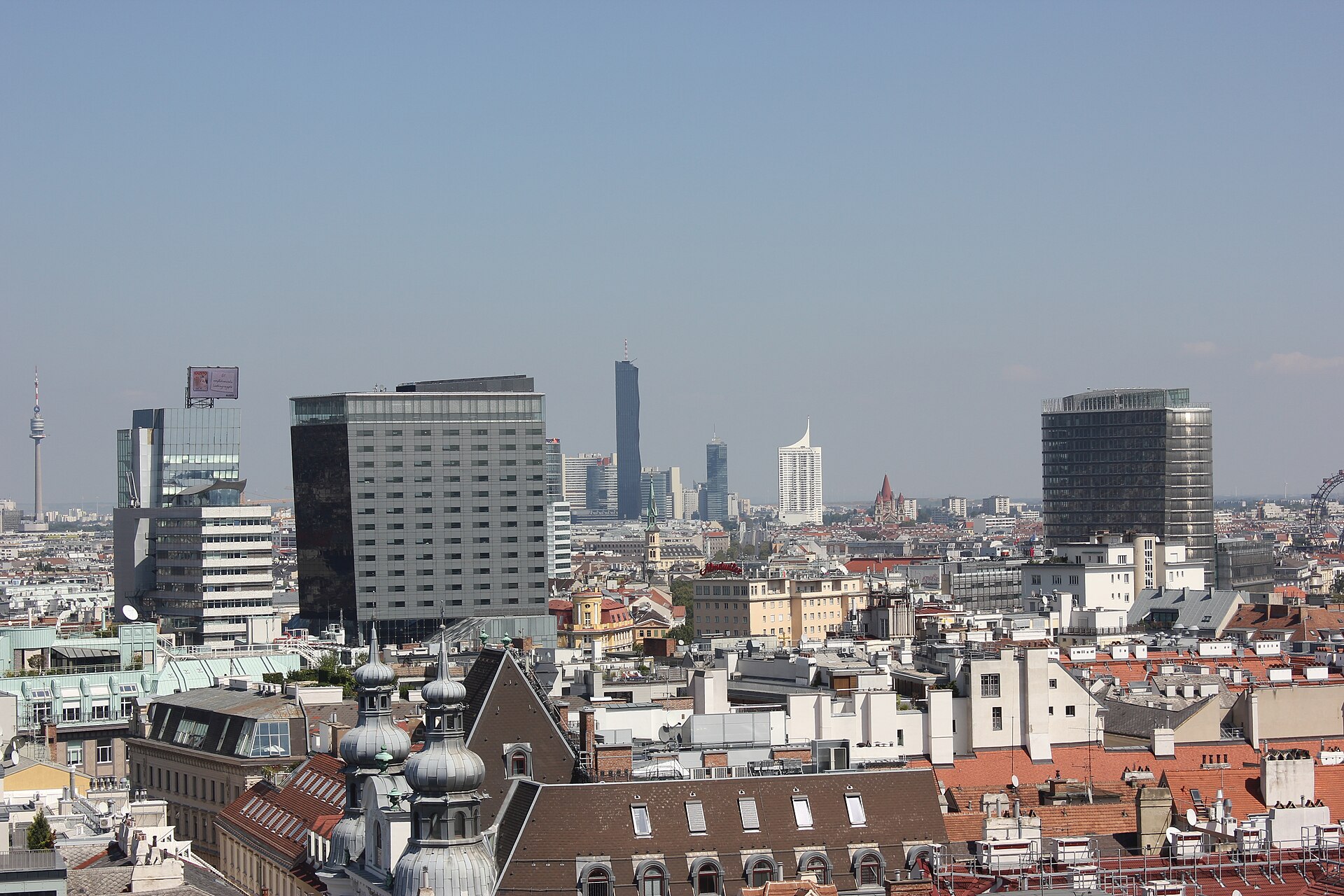
Vienna is 414.78 km² holding 2,028,499 people, and almost everything a visitor comes for sits inside a single ring road less than a kilometre across. The Inner...
Photograph · Andrzej Otrębski · CC BY-SA 4.0
Set your days, your pace and the hours you actually want to be out. The planner works around closing days and travel time, and leaves room to eat.
Reviewed by Elena Voss · Roavina Travel Editor
Vienna is 414.78 km² holding 2,028,499 people, and almost everything a visitor comes for sits inside a single ring road less than a kilometre across.
The Innere Stadt — the 1st district — is the medieval core, and the Ringstrasse that surrounds it was built in the second half of the nineteenth century on the line of the demolished bastions. The 371-hectare historic centre has been a UNESCO World Heritage Site since 2001; it was on the endangered list from 2017 to 2026.
The wider urban area holds 2,223,236 people and the metropolitan area 2,890,577, which makes Vienna the tenth largest city in Europe and by a long way the largest in Austria.
Checked 2026-08-23
September · September in Vienna has mean high 20.3°C, mean low 11.7°C, rainfall 53.5 mm, 7.0 rain days. Comfortable daytime temperatures support Vienna's parks, boulevards, and outdoor café culture. September supports a full day of outdoor stops in Vienna.
Ranked by importance — sitelinks, pageviews and heritage status, not editor preference.
96 places match
Category
Typical visit duration
Interests
The Pestsäule is a promise made by an emperor who had left town.
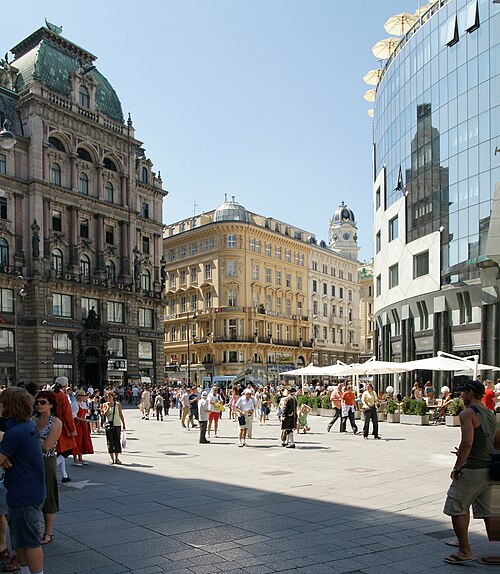
Stephansplatz is the square at the geographic and historic centre of Vienna, formed around St. Stephen's Cathedral and taking its name directly from it.
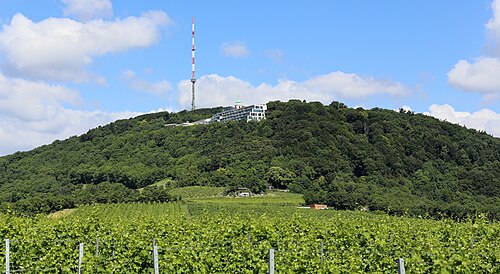
Kahlenberg is a 484 m hill on the northern rim of the Vienna Woods and the city's most visited viewpoint, looking south over the whole basin the Innere Stadt sits in and east across the Danube towards the Marchfeld plain.
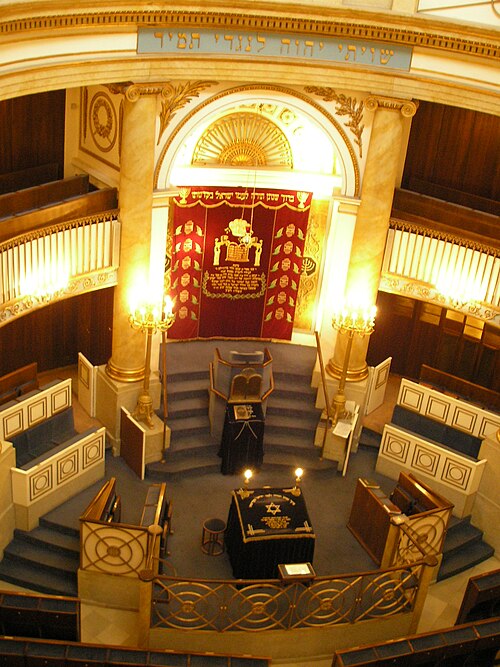
The Stadttempel is Vienna's main synagogue, and it survived 1938 because it is hidden.
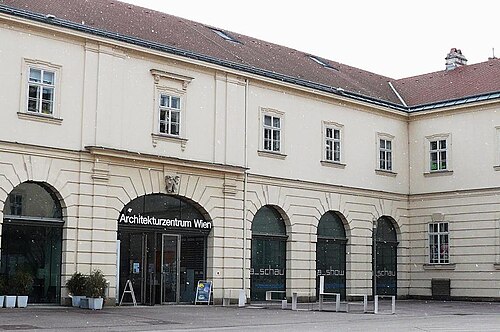
The Architekturzentrum Wien, usually shortened to Az W, is Austria's centre for the exhibition and documentation of architecture, inside the MuseumsQuartier in the 7th district.
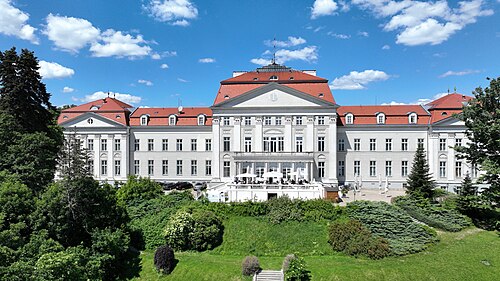
Schloss Wilhelminenberg sits on a wooded hill above Ottakring, Vienna's 16th district, built in the 1730s for Field Marshal Guido Starhemberg and later named for Archduchess Wilhelmine, who owned it in the nineteenth century.
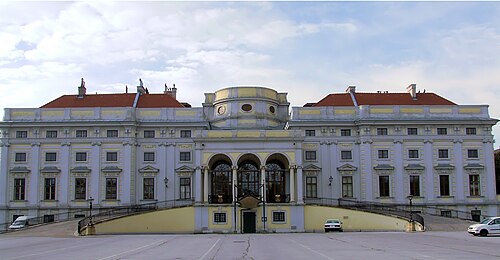
Palais Schwarzenberg is a Baroque garden palace at the edge of the Belvedere district, begun for Count Heinrich Franz von Mansfeld-Fondi and continued after his death by the Schwarzenberg family, who gave it its present name.
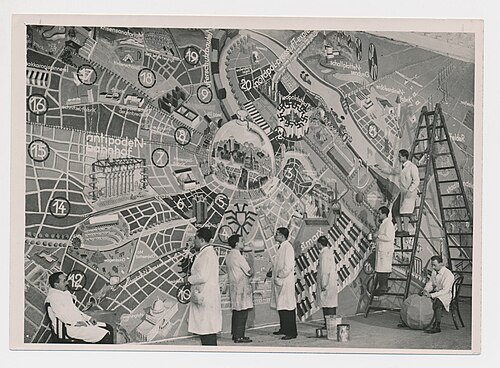
Künstlerhaus Wien
The Kunstlerhaus is Vienna's oldest surviving purpose-built exhibition hall for the fine arts, standing on Karlsplatz next to the Musikverein.
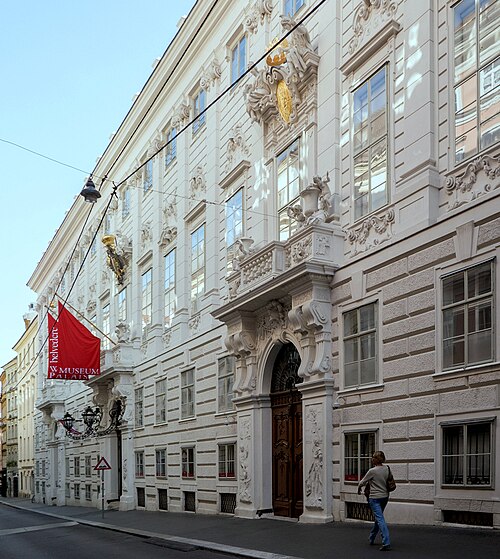
Winterpalais
The Winter Palace of Prince Eugene (Winterpalais des Prinzen Eugen) is a Baroque town palace at Himmelpfortgasse 8 in Vienna's first district, built between 1695 and 1724 as the city residence of Prince Eugene of Savoy, the Habsburg field marshal…
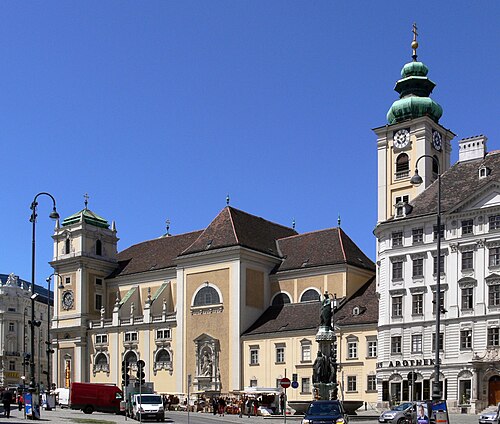
Schottenstift is a working Benedictine abbey on Freyung square in the Innere Stadt, founded in 1155 by Duke Henry II Jasomirgott.
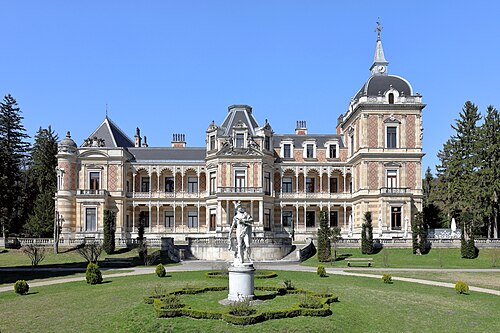
Hermesvilla is a villa built 1882-1886 inside the Lainzer Tiergarten, the walled game reserve on Vienna's western edge, commissioned by Emperor Franz Joseph I as a retreat for Empress Elisabeth ("Sisi").
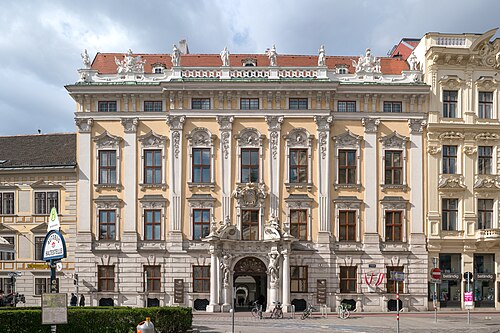
Palais Kinsky is a Baroque palace at Freyung 4 in Vienna's first district, built between 1713 and 1716 by Johann Lukas von Hildebrandt for Count Philipp Vinzenz Daun, a Habsburg field marshal, and later passed by marriage to the Kinsky…
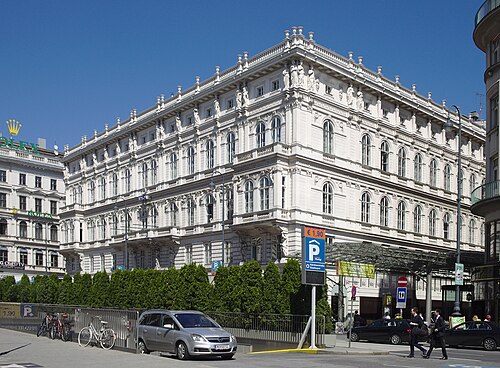
Palais Todesco is a Ringstrasse-era palace facing the Vienna State Opera across Kärntner Straße, built between 1861 and 1864 by Ludwig Förster and Theophil Hansen for the brothers Eduard and Hermann Todesco, Jewish bankers ennobled by Franz Joseph I as…
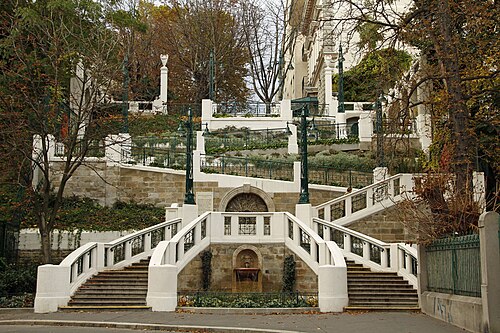
The Strudlhofstiege is a public outdoor Art Nouveau stairway in Alsergrund, connecting the upper street Strudlhofgasse to the lower Liechtensteinstrasse across a steep slope.
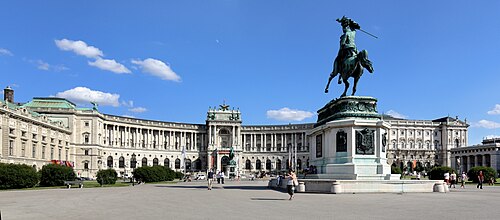
Schweizertor
The Hofburg is not a palace but a district of palaces, and the Austrian president works in it.
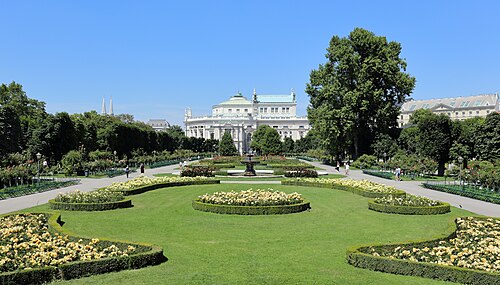
Volksgarten is a public park in Vienna's Innere Stadt, laid out between 1821 and 1823 on land cleared after Napoleon's troops demolished part of the city's fortifications in 1809.
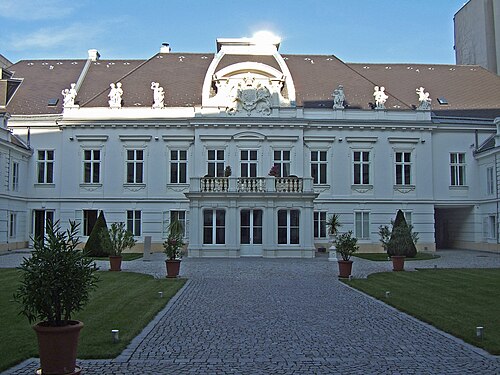
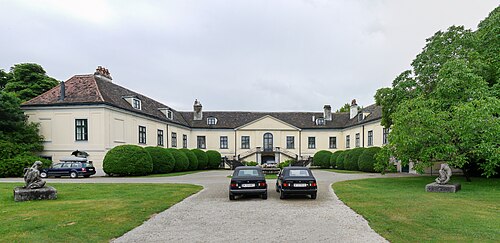
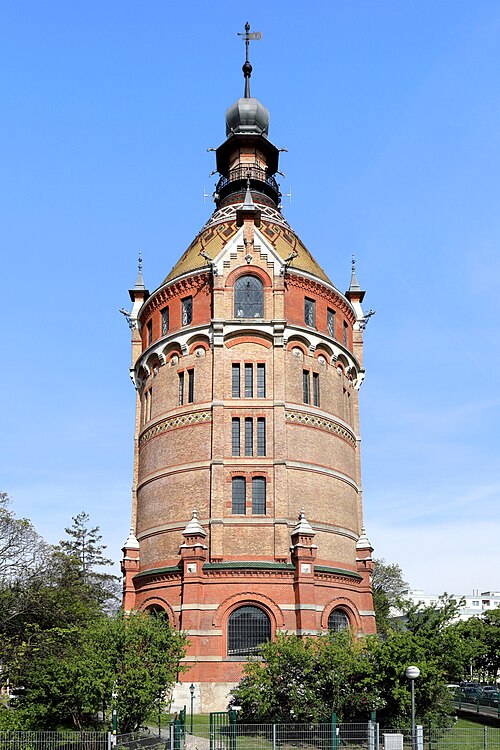
Wasserturm Favoriten
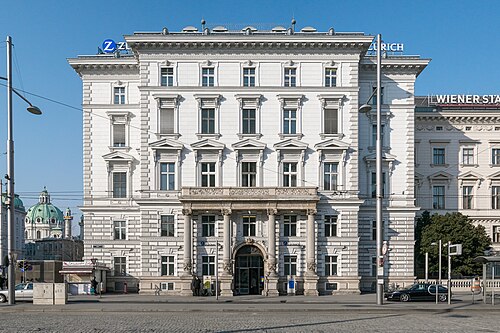
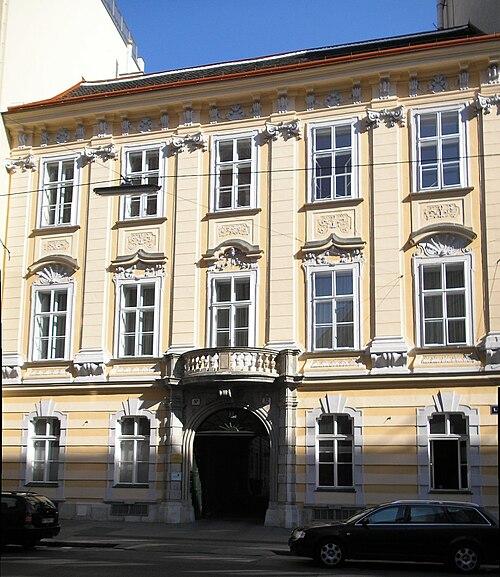
Palais Windischgrätz
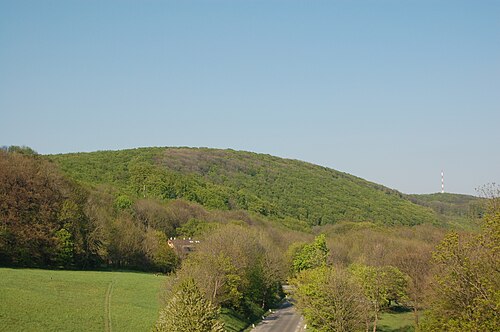
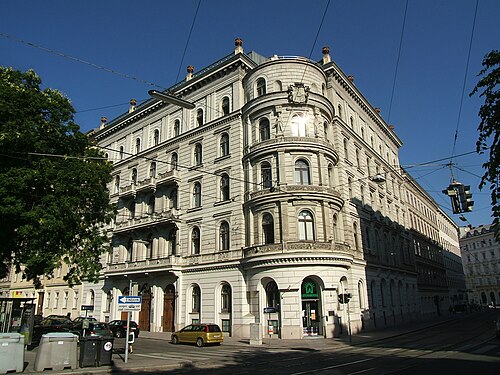
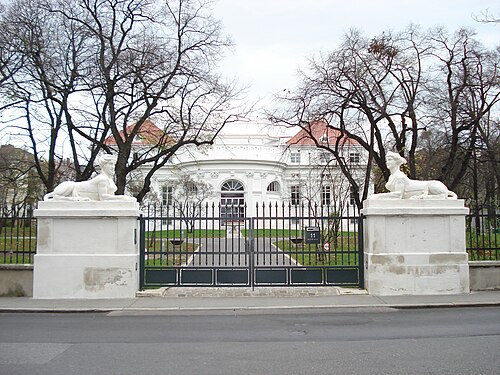
Palais Starhemberg-Schönburg
District boundaries come from OSM administrative relations, so a district page holds exactly the places inside it — plus, for the islands and the coast, the nearest district by proximity.
Twenty-three districts, numbered roughly in the order they were absorbed, arranged around the 1st.
The Innere Stadt is the 1st and holds the cathedral, the Hofburg, the opera and most of what a short visit will see. Districts 2 to 9 and 20 were incorporated in 1850 and lie inside the Gürtel, the outer ring road; they are the inner districts and are where most visitors sleep and eat. Districts 10 to 19 and 21 to 23 came in between 1874 and 1938, mostly in 1892.
Districts 21 and 22 are across the Danube on the left bank — Floridsdorf is the northernmost part of the city and Donaustadt the largest by area. Districts 2 and 20 sit on the island between the Danube and the Donaukanal.
The postal code gives the district: 1XXA, where the middle two digits are the district number. An address at 1070 is in the 7th.
Checked 2026-08-23
The U-Bahn, the trams, and a ticket that covers both.
The U-Bahn has five lines, 109 stations and 83.9 km of track, and it opened on 25 February 1978. It carried 404.8 million passengers in 2023. Trains run from about 05:00 to 01:00 at intervals of two to fifteen minutes, and run all night at fifteen-minute intervals on Friday and Saturday nights and before public holidays.
A sixth line, the U5, is under construction for completion between 2026 and 2032; the network will then be 90 km with 116 stations.
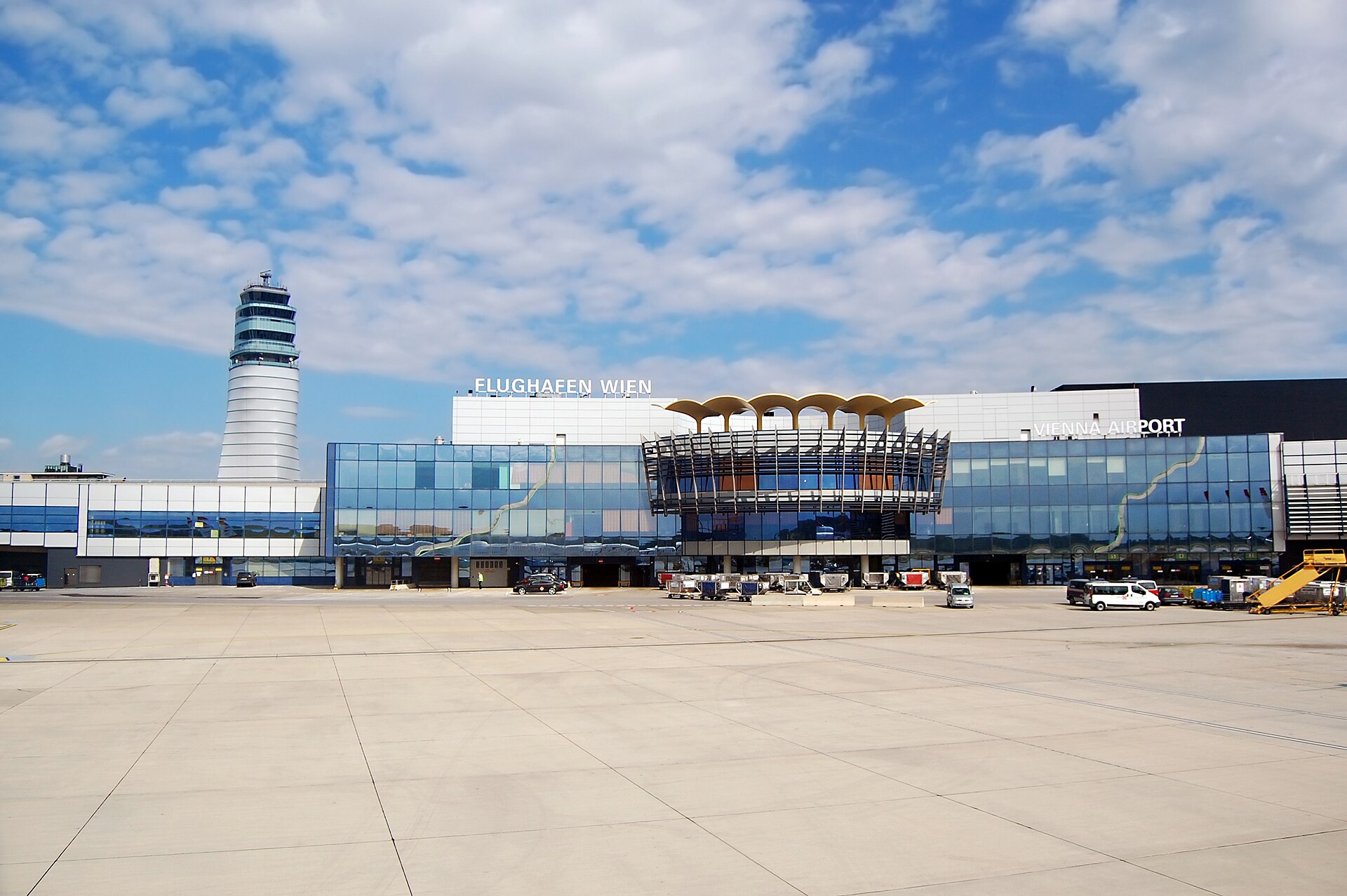
Tickets are integrated with the trams, the buses and the S-Bahn through the VOR system, so one ticket covers the whole journey. Some airport services are outside it.
Inside the Ring, walking beats all of it.
Checked 2026-08-23
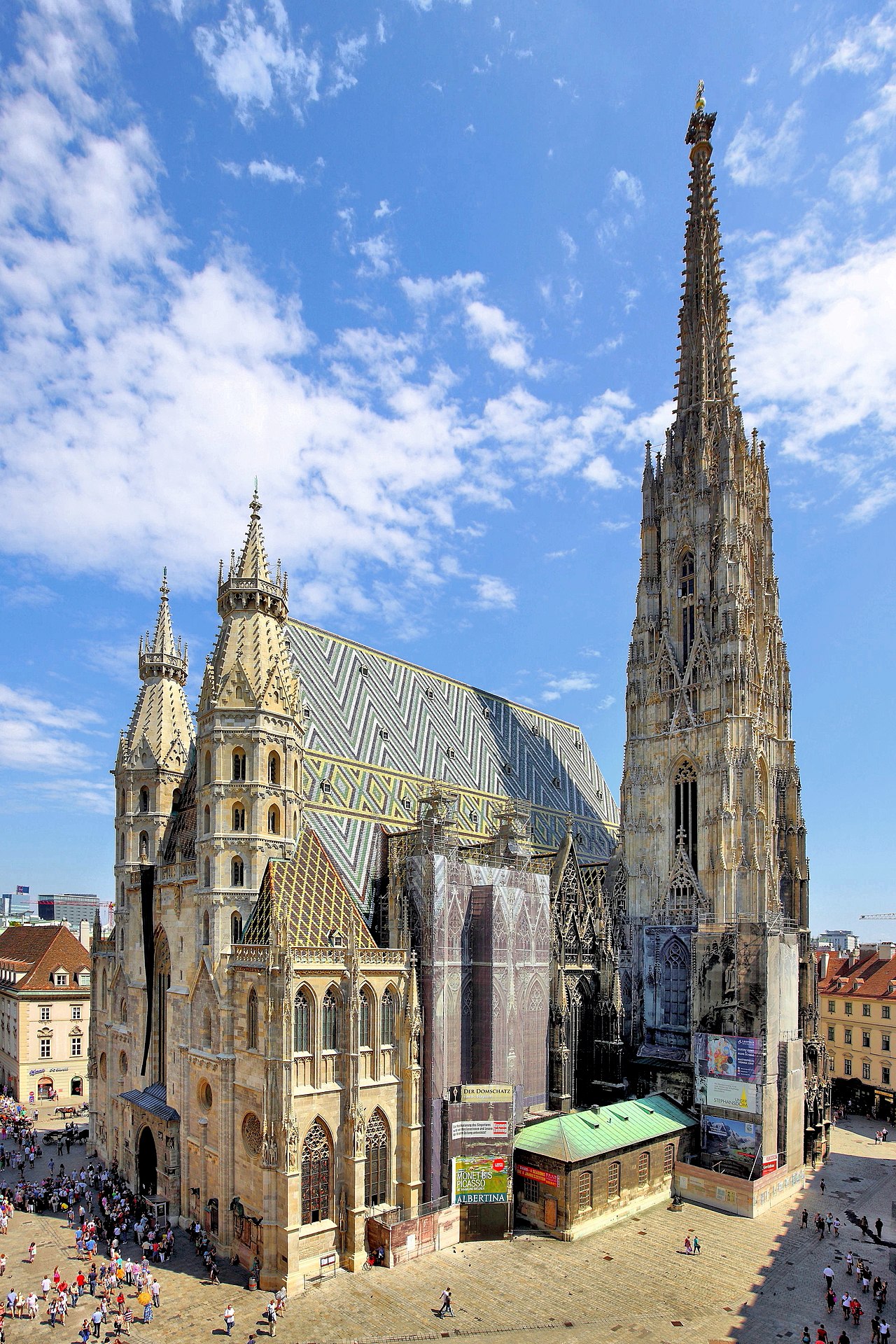
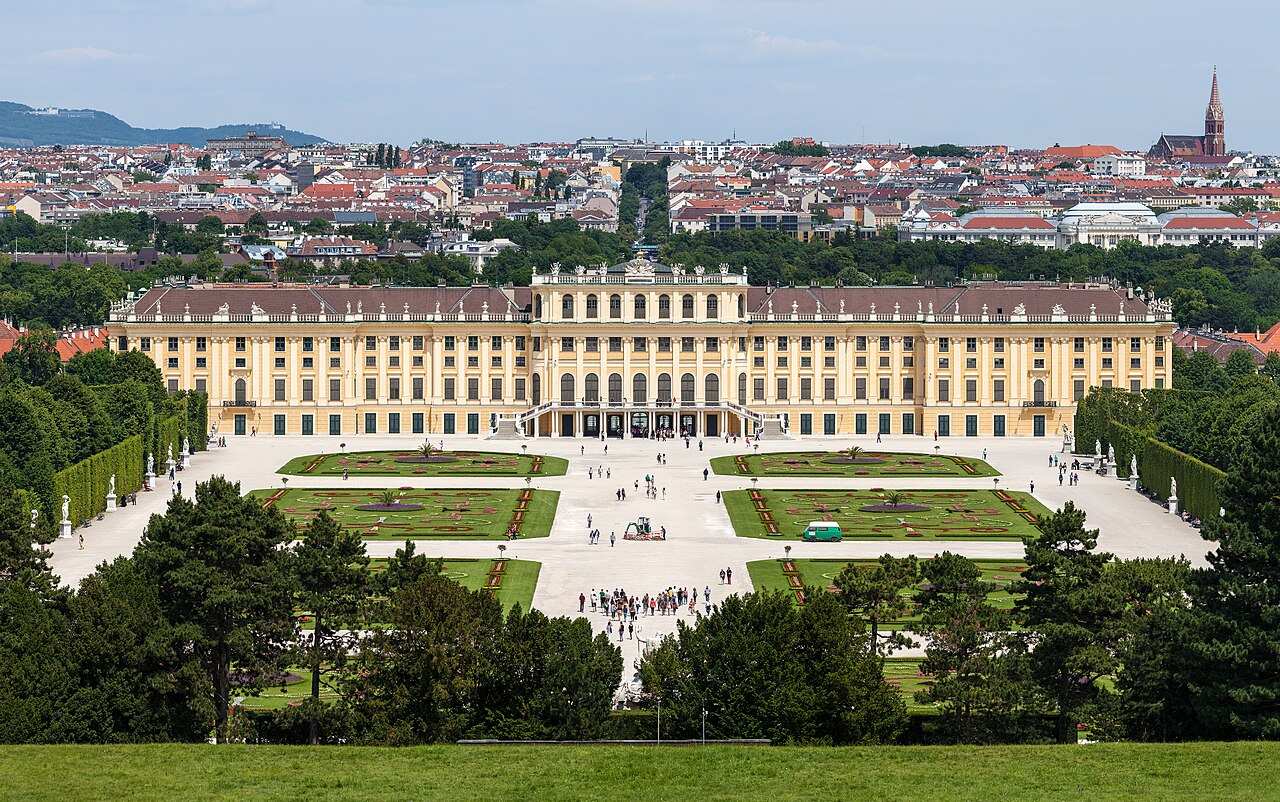
Three to four. Two days cover the Innere Stadt and the Ring — the cathedral, the Hofburg, the opera, the museums on the Maria-Theresien-Platz. A third takes Schönbrunn and the Belvedere, and a fourth allows a proper concert or an afternoon in the wine villages.
Twenty-three of them, numbered roughly in the order they joined the city. The 1st is the medieval centre, districts 2–9 and 20 came in 1850 and lie inside the Gürtel, and the rest arrived between 1874 and 1938. The postal code carries the number: 1070 is the 7th district.
The boulevard built in the second half of the nineteenth century on the line of the demolished city bastions, encircling the Innere Stadt. Most of Vienna's great public buildings face onto it.
For anything beyond the Ring, yes. Five lines, 109 stations, 83.9 km, running from about 05:00 to 01:00 and all night at weekends. Inside the Ring, walking is faster.
April to June and September to October. Summer afternoons reach 27–32°C and the palace gardens have little shade; winter hovers around freezing but brings the concert season and the Christmas markets.
414.78 km² with 2,028,499 people in the city proper, 2,223,236 in the urban area and 2,890,577 in the metropolitan area — the tenth largest city in Europe.

.JPG)
.jpg)
